Perfectionism Psychology
Understand when high standards become a pattern that quietly delays progress.
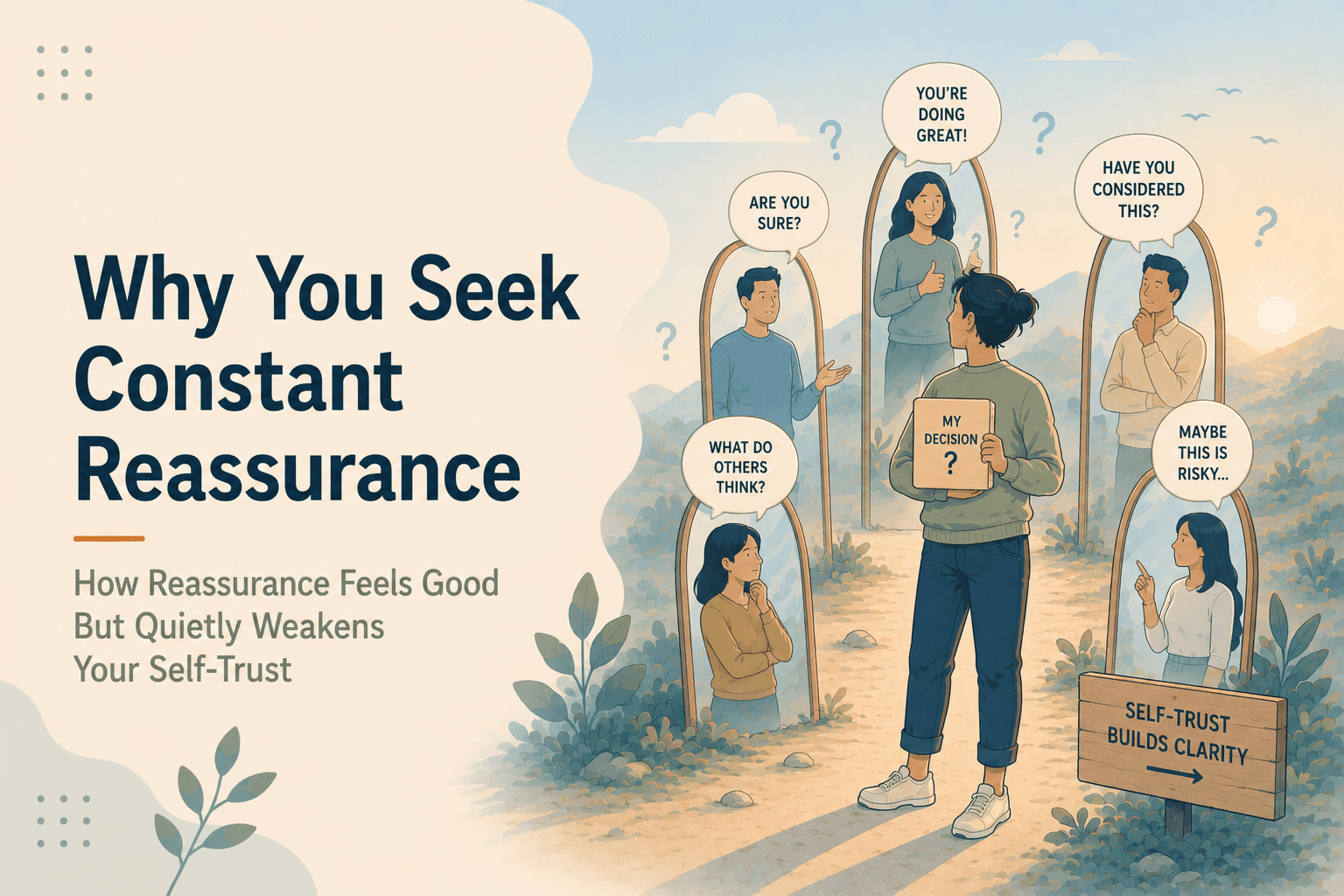

Why You Seek Constant Reassurance
Why you seek constant reassurance reveals how temporary relief quietly trains the mind to distrust its own judgment and fear uncertainty.
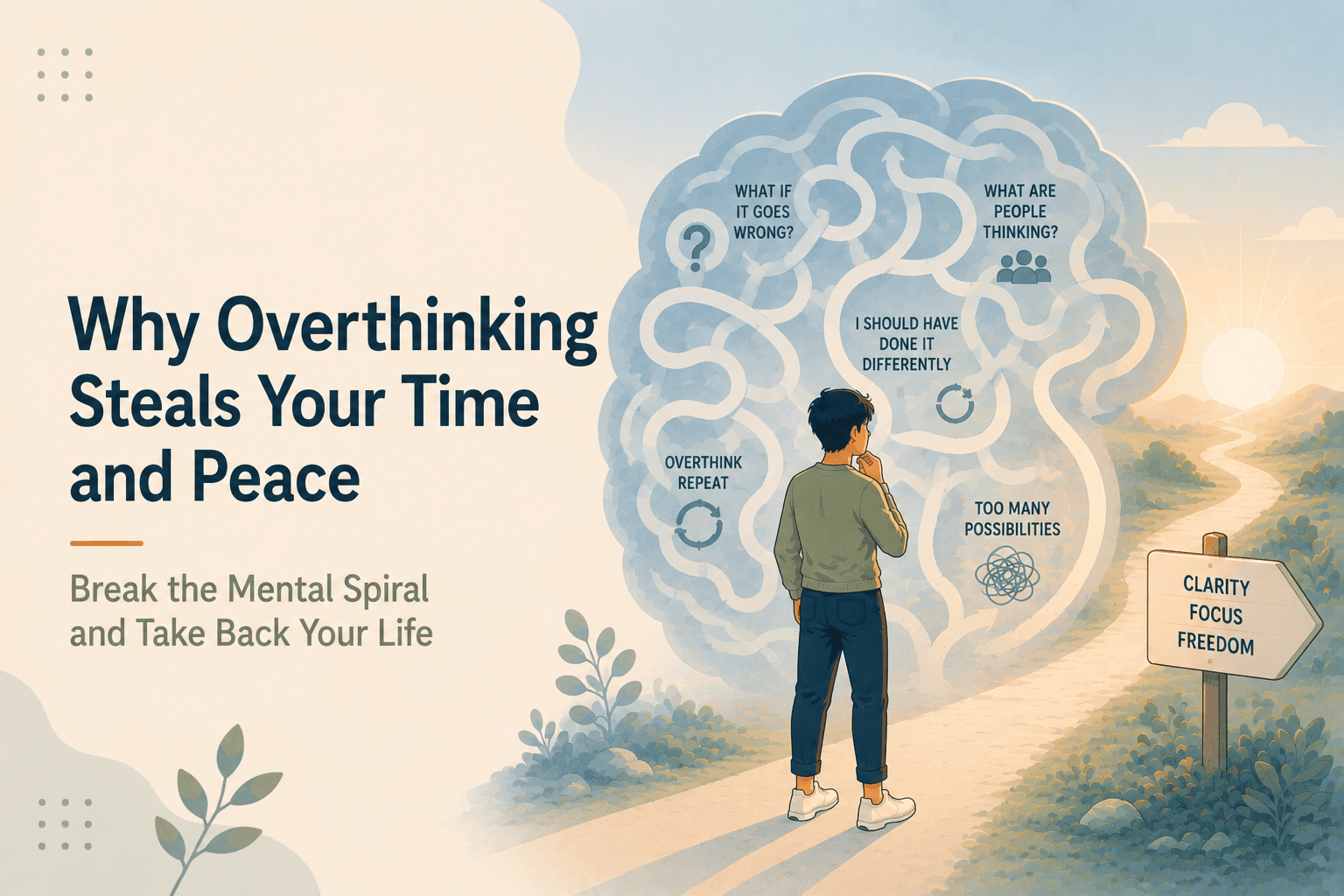
Why You Trust Others More Than Yourself
Why you trust others more than yourself reveals how doubt, reassurance, and repeated comparison quietly weaken confidence in your own judgment.
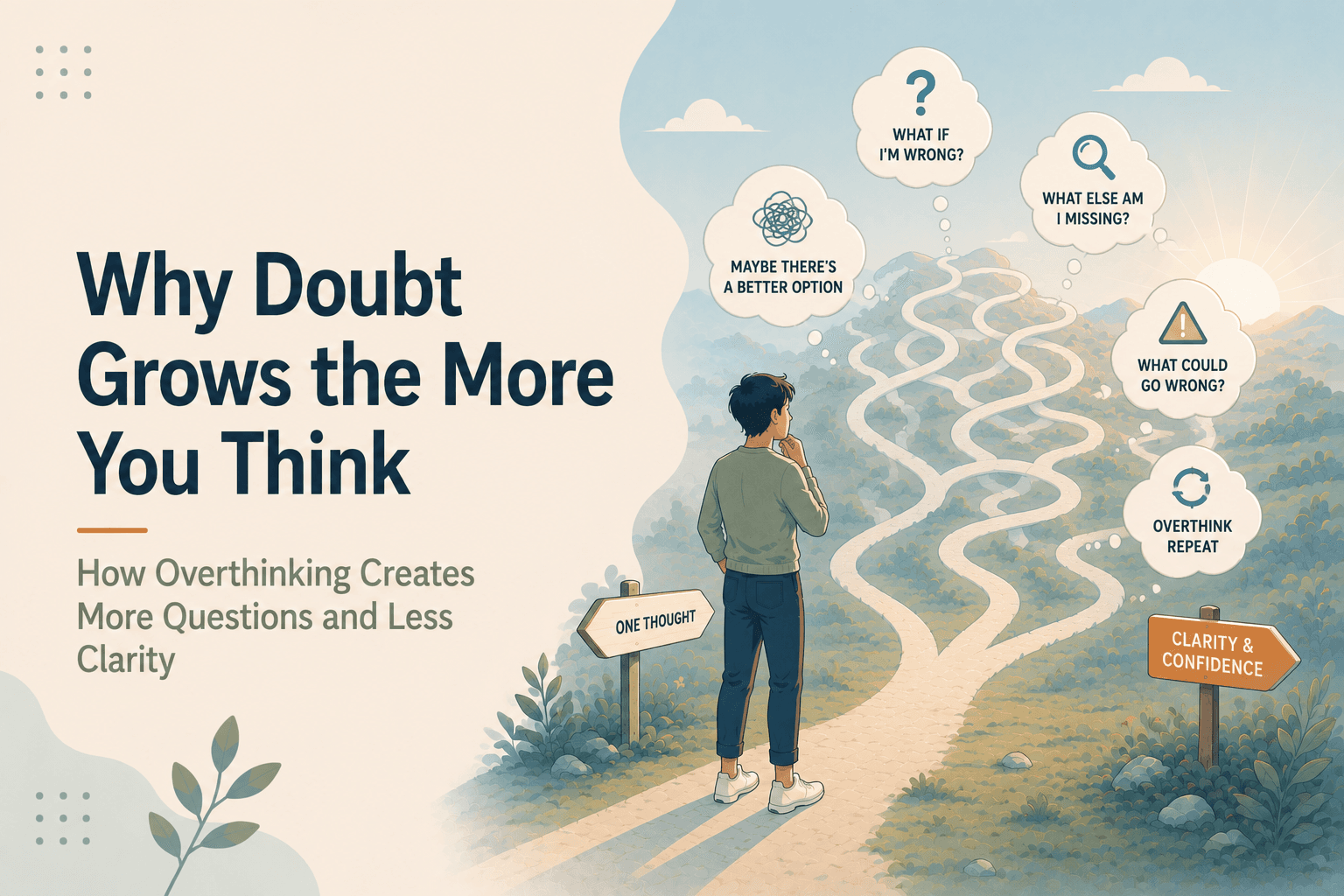
Why Doubt Grows the More You Think
Why doubt grows the more you think reveals how repeated analysis multiplies possibilities, making uncertainty feel stronger instead of clearer.
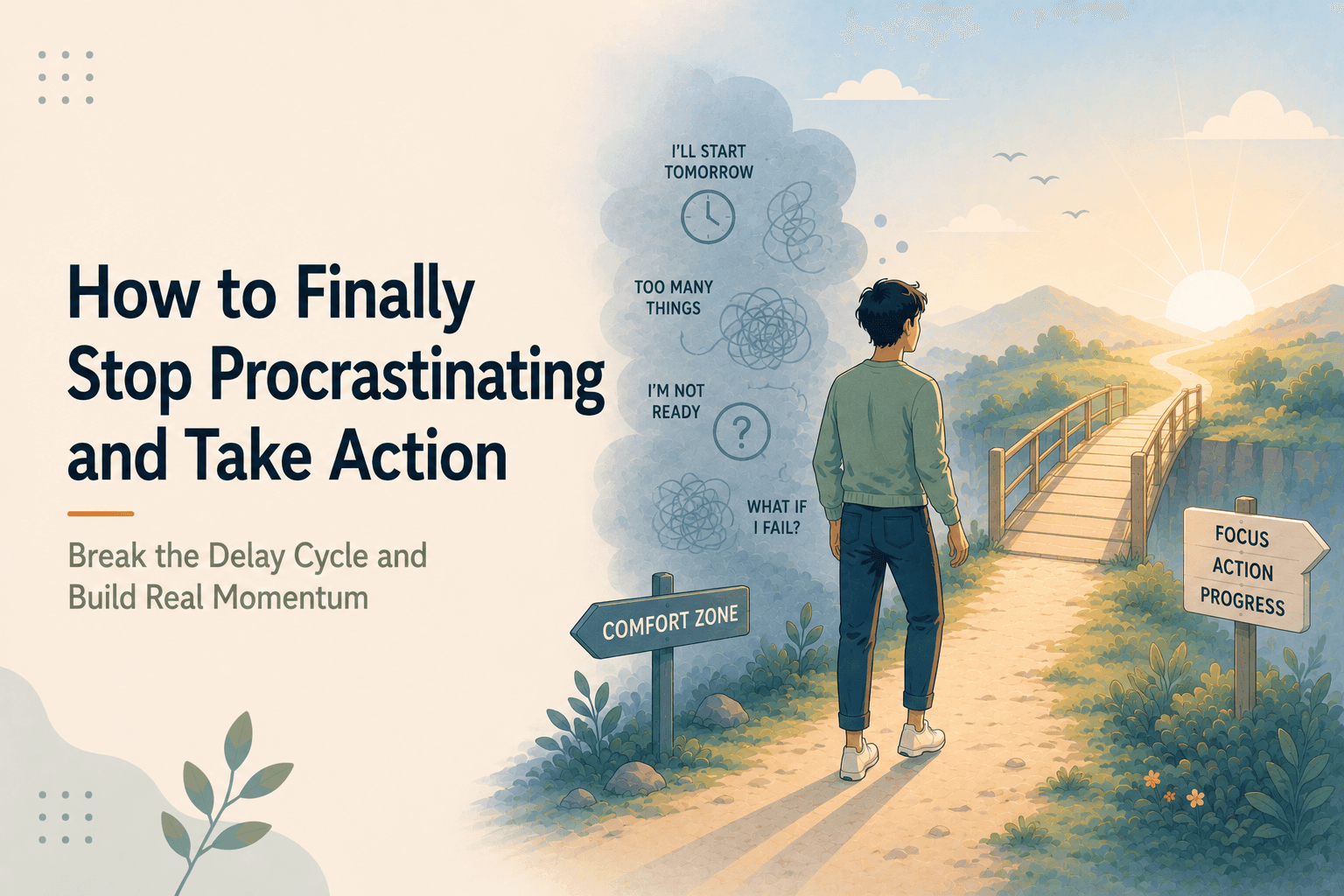
Why You Feel Less Capable Than You Are
Why you feel less capable than you are reveals how self-monitoring and doubt can quietly distort your view of abilities you already possess.
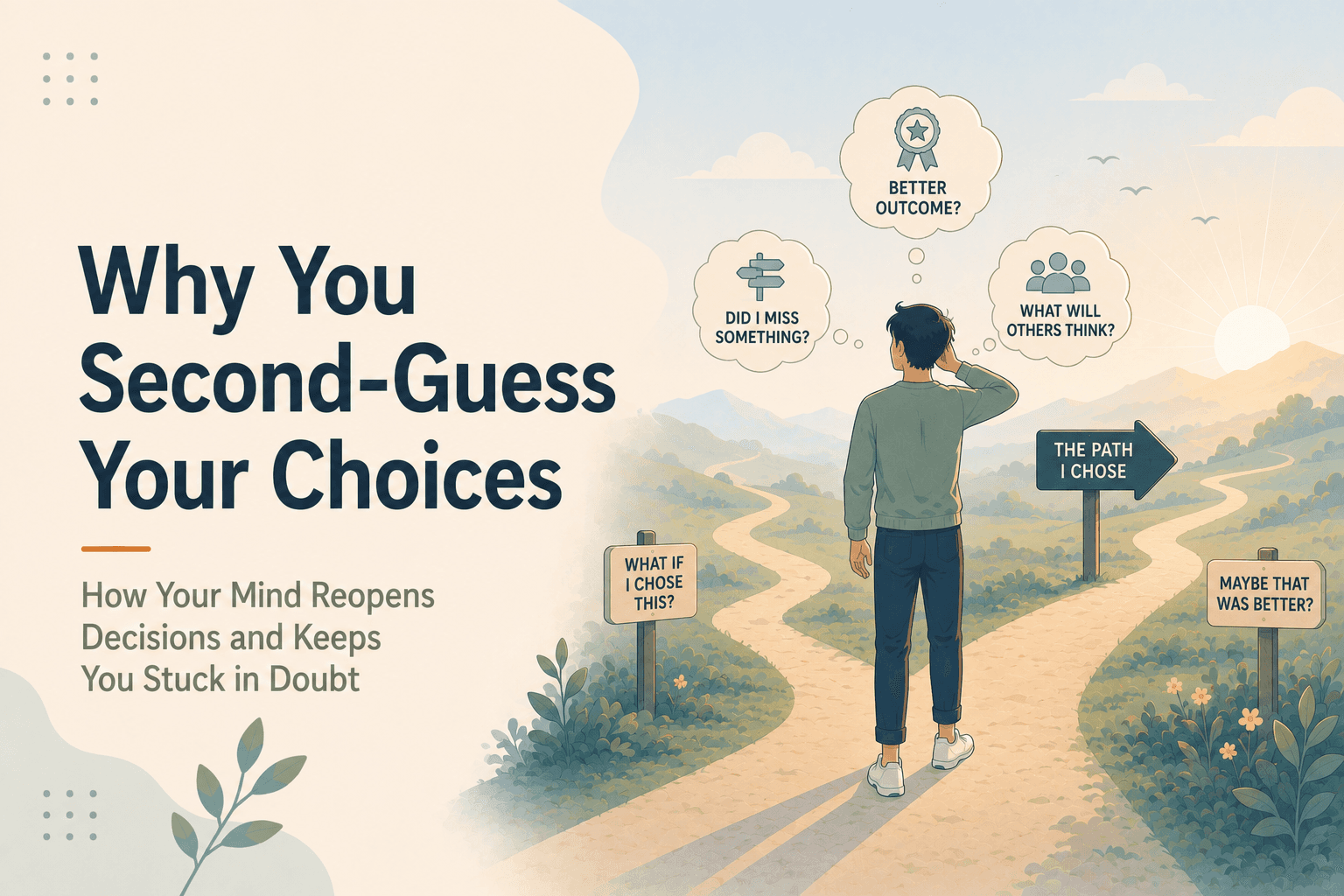
Why You Second-Guess Your Choices
Why you second-guess your choices reveals how the mind quietly reopens decisions after commitment, turning ordinary uncertainty into persistent doubt.
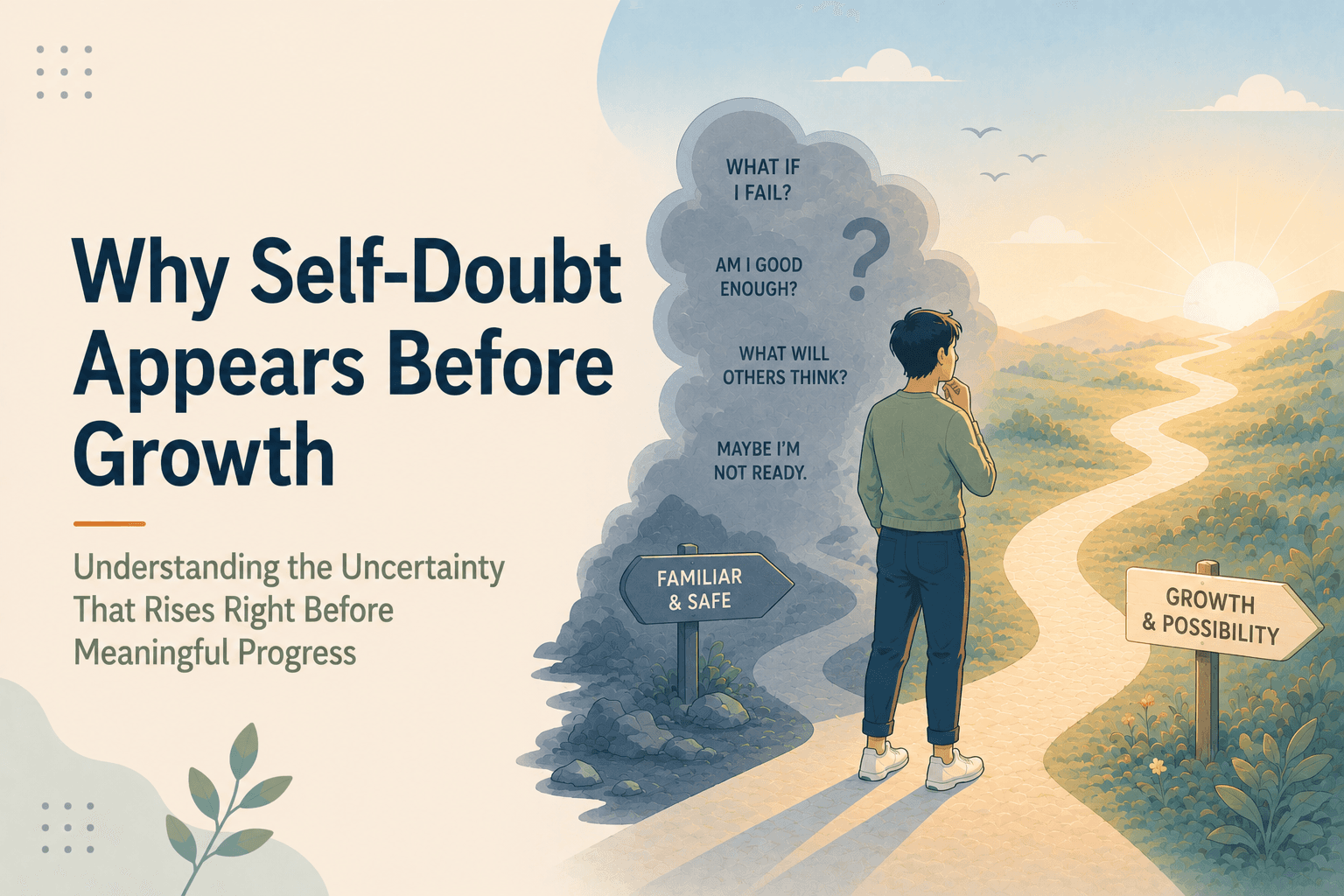
Why Confidence Drops When It Matters
Why confidence drops when it matters reveals how pressure shifts attention inward, making familiar abilities feel uncertain when they are needed most.
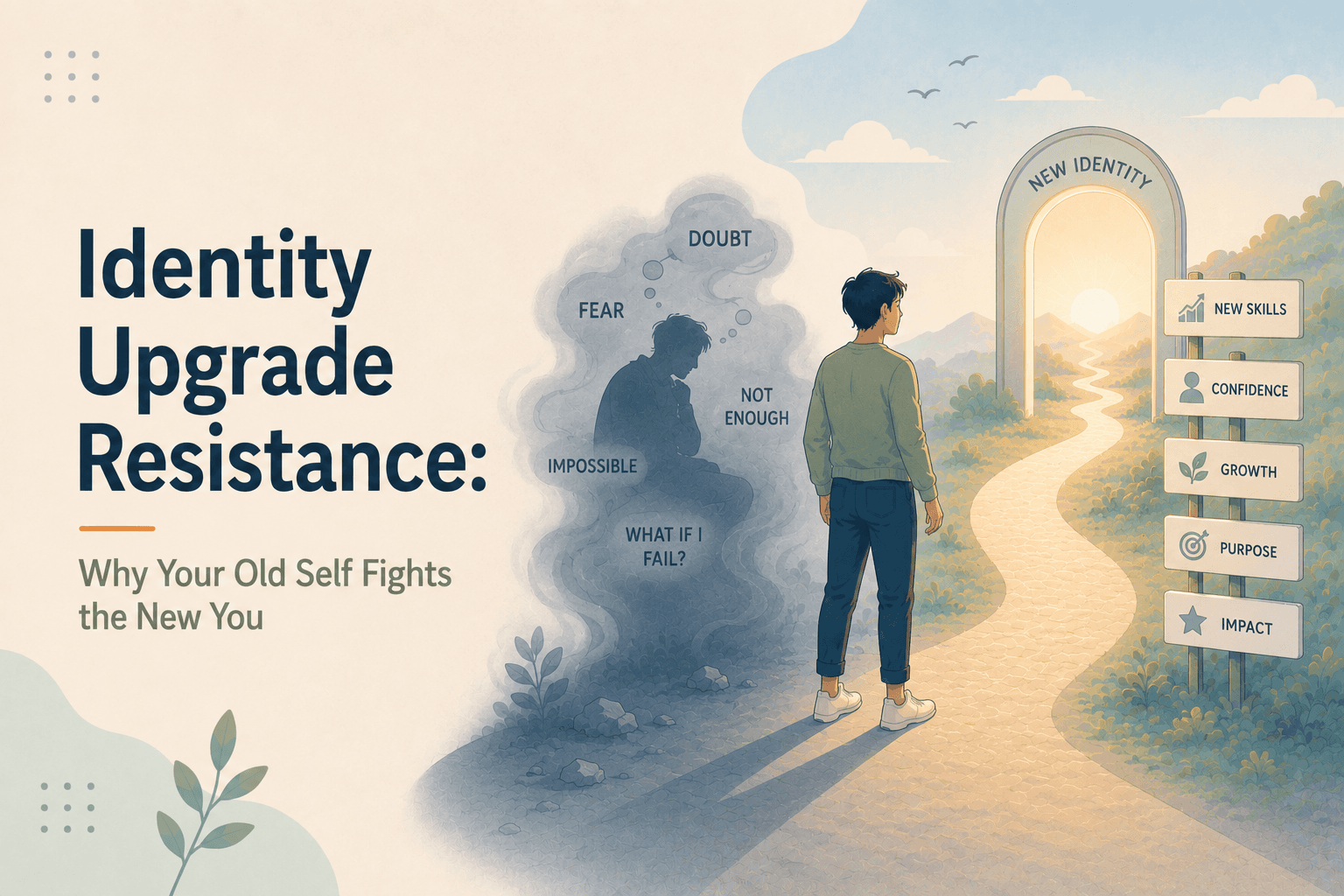
Why You Question Yourself After Deciding
Why you question yourself after deciding reveals how the mind often increases uncertainty after commitment, quietly turning decisions into doubt.
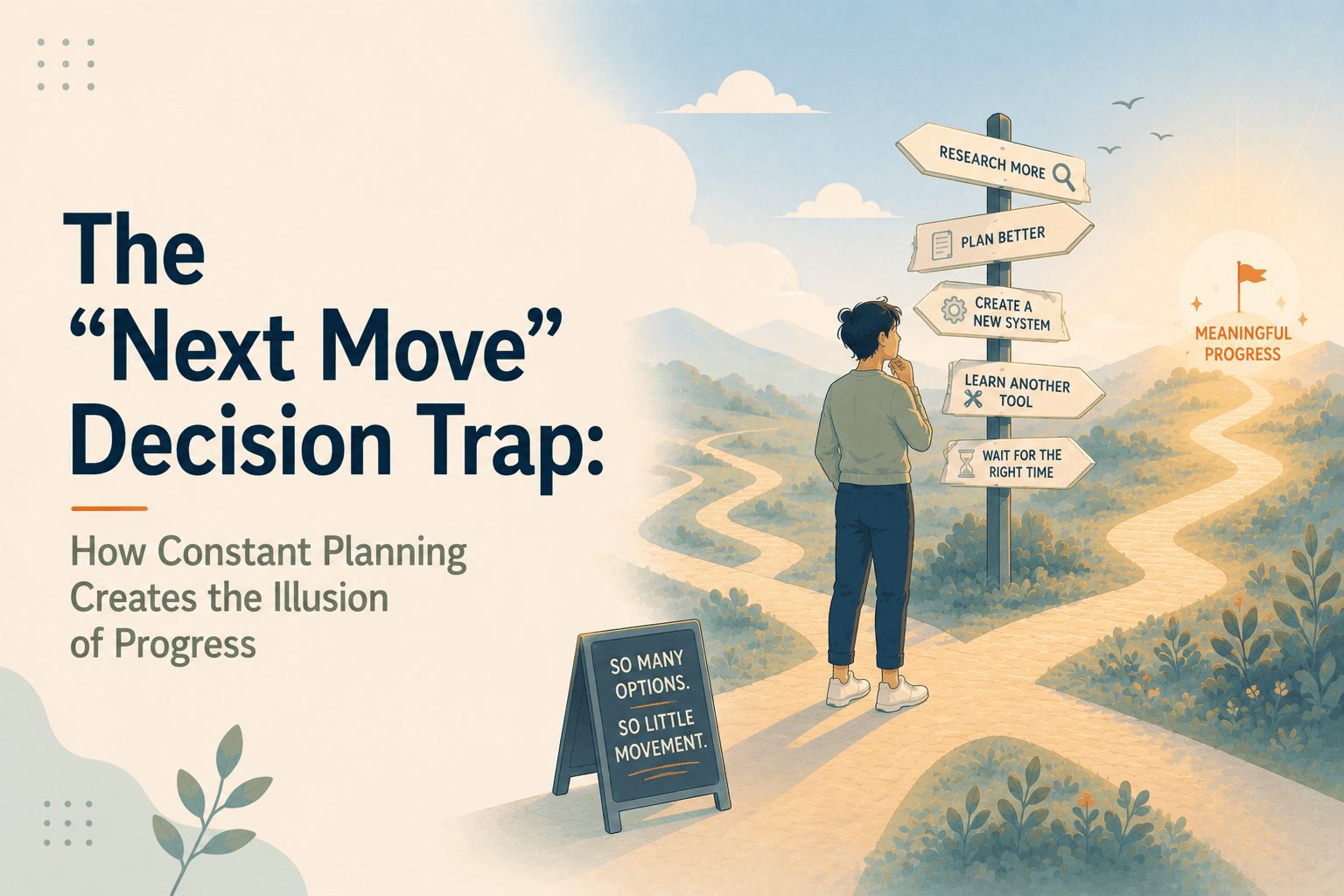
Case Study: The High Effort, Low Output Pattern
The high effort, low output pattern shows how constant activity can absorb time and attention while producing very little visible progress.
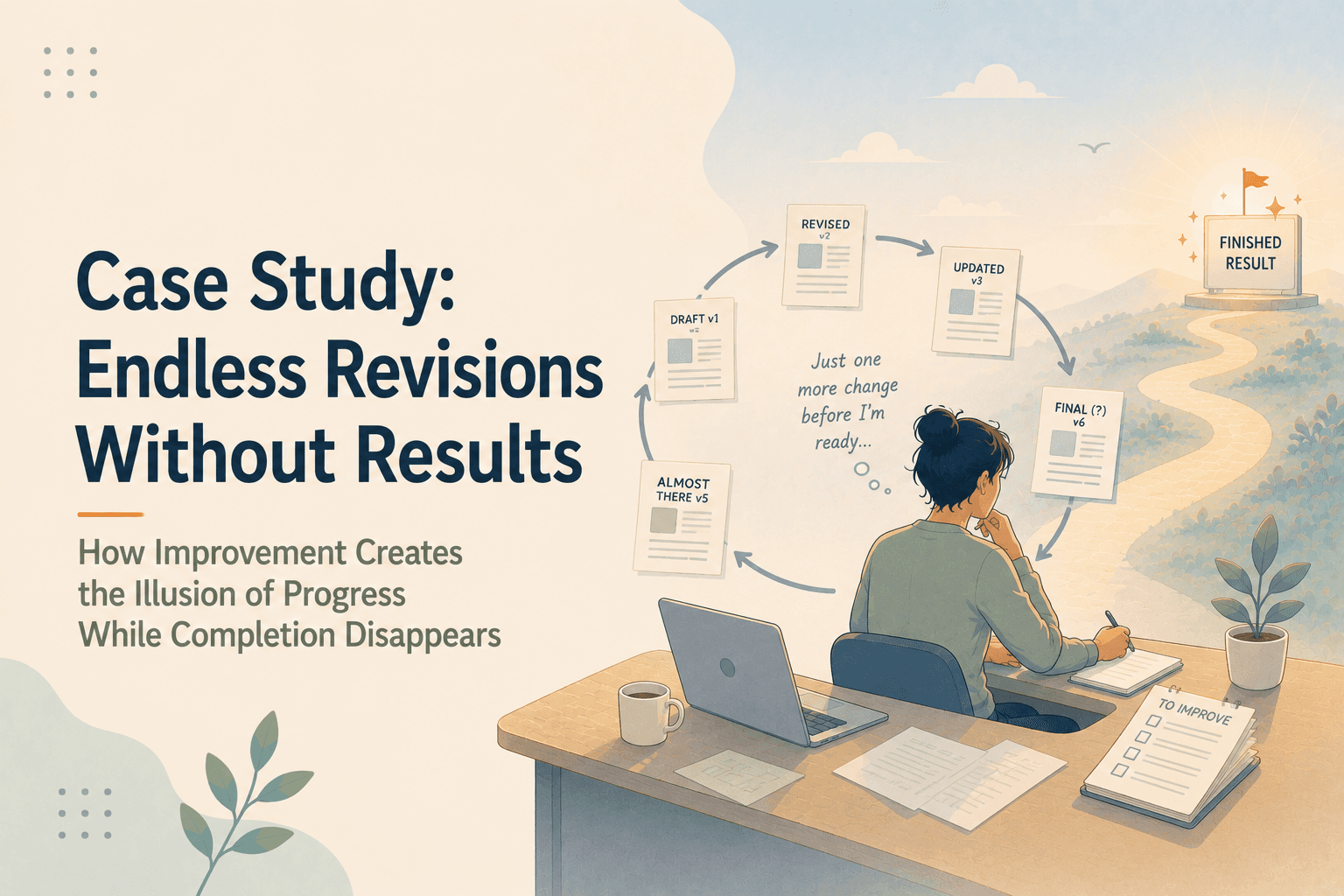
Case Study: Endless Revisions Without Results
Endless revisions without results reveal how repeated improvement can create the appearance of progress while quietly preventing meaningful completion.
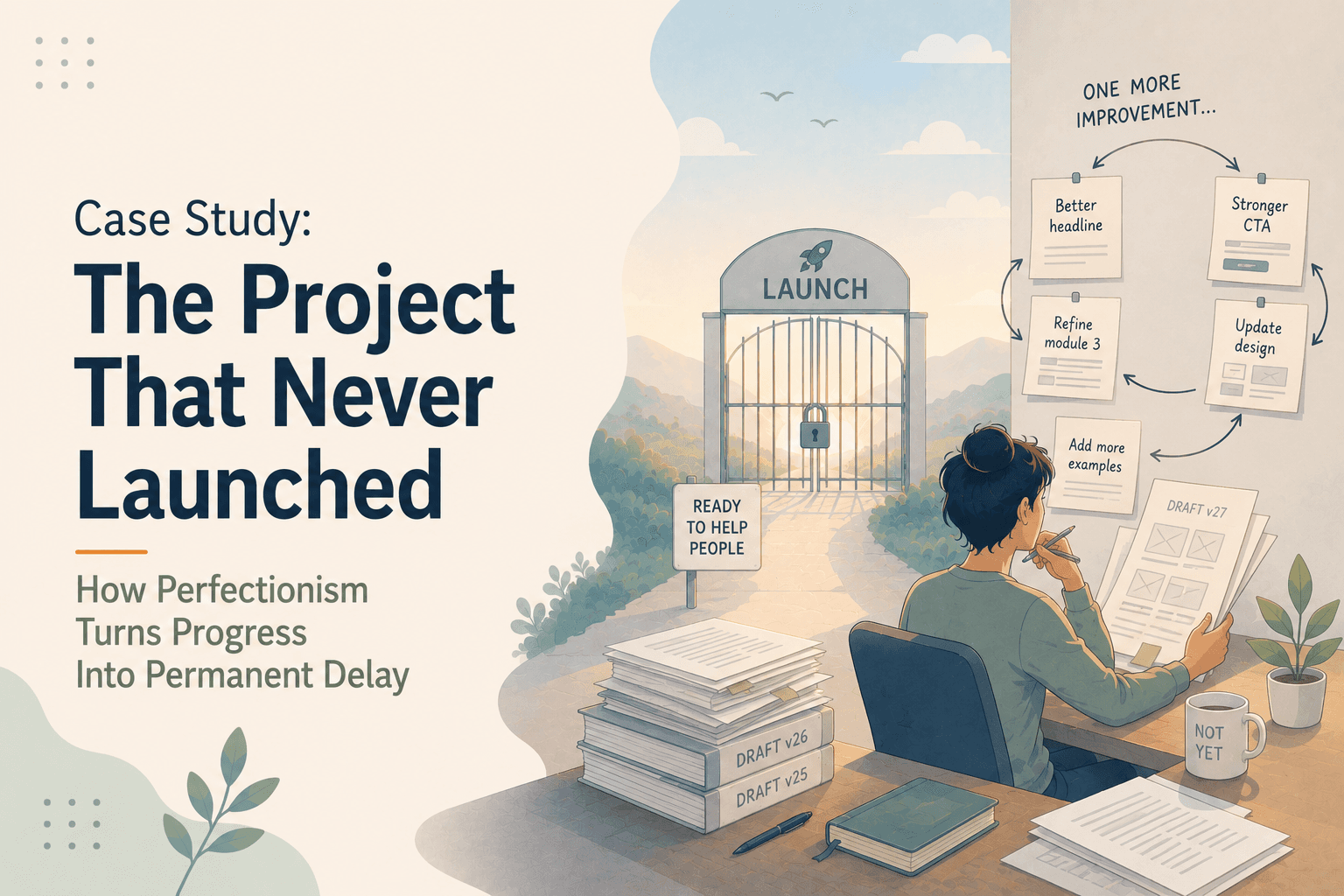
Case Study: The Project That Never Launched
The Project That Never Launched shows how repeated refinement can quietly replace progress until useful work remains permanently unfinished.
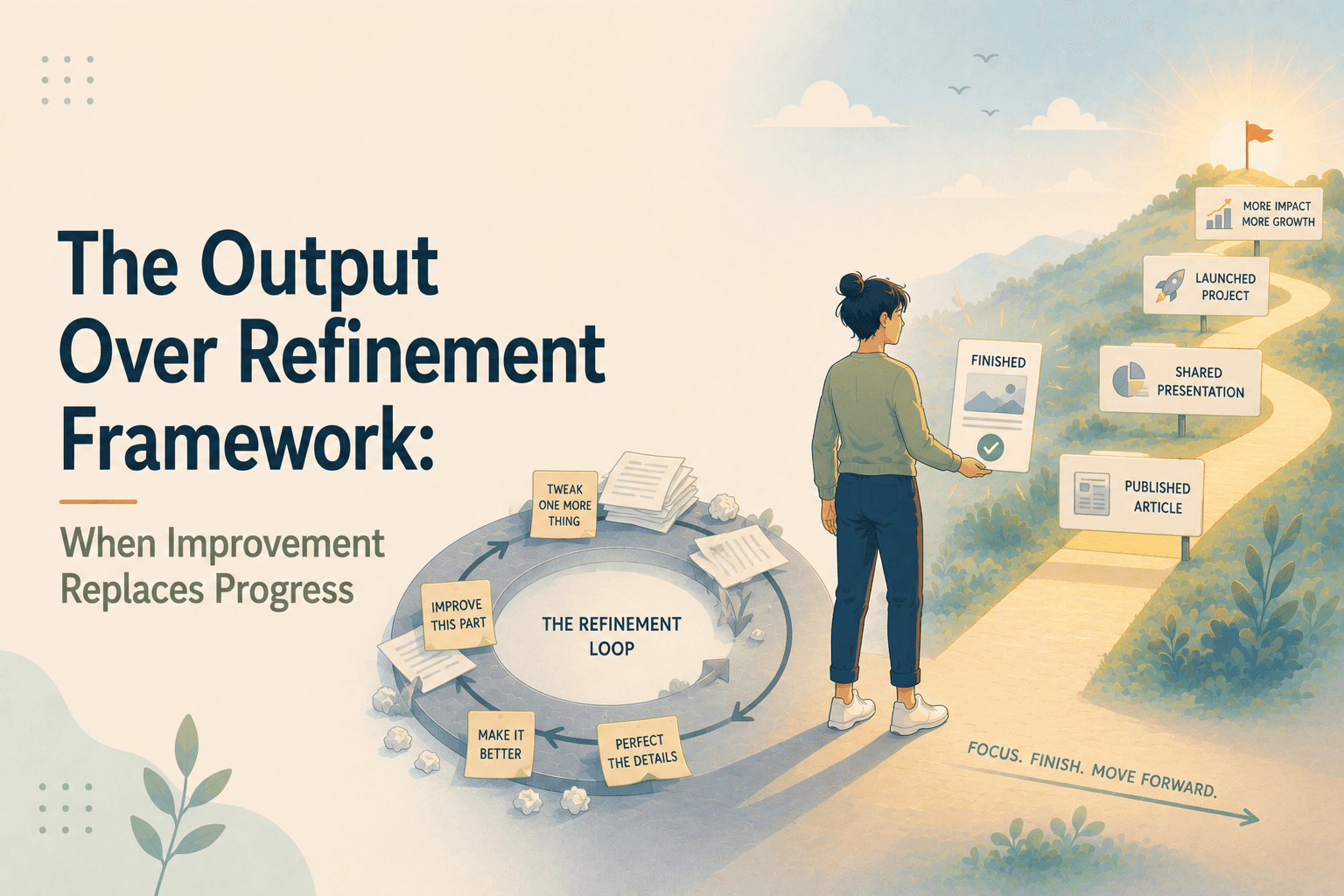
The Output Over Refinement Framework: When Improvement Replaces Progress
The Output Over Refinement Framework reveals how repeated polishing can quietly replace visible progress and keep useful work trapped in revision.
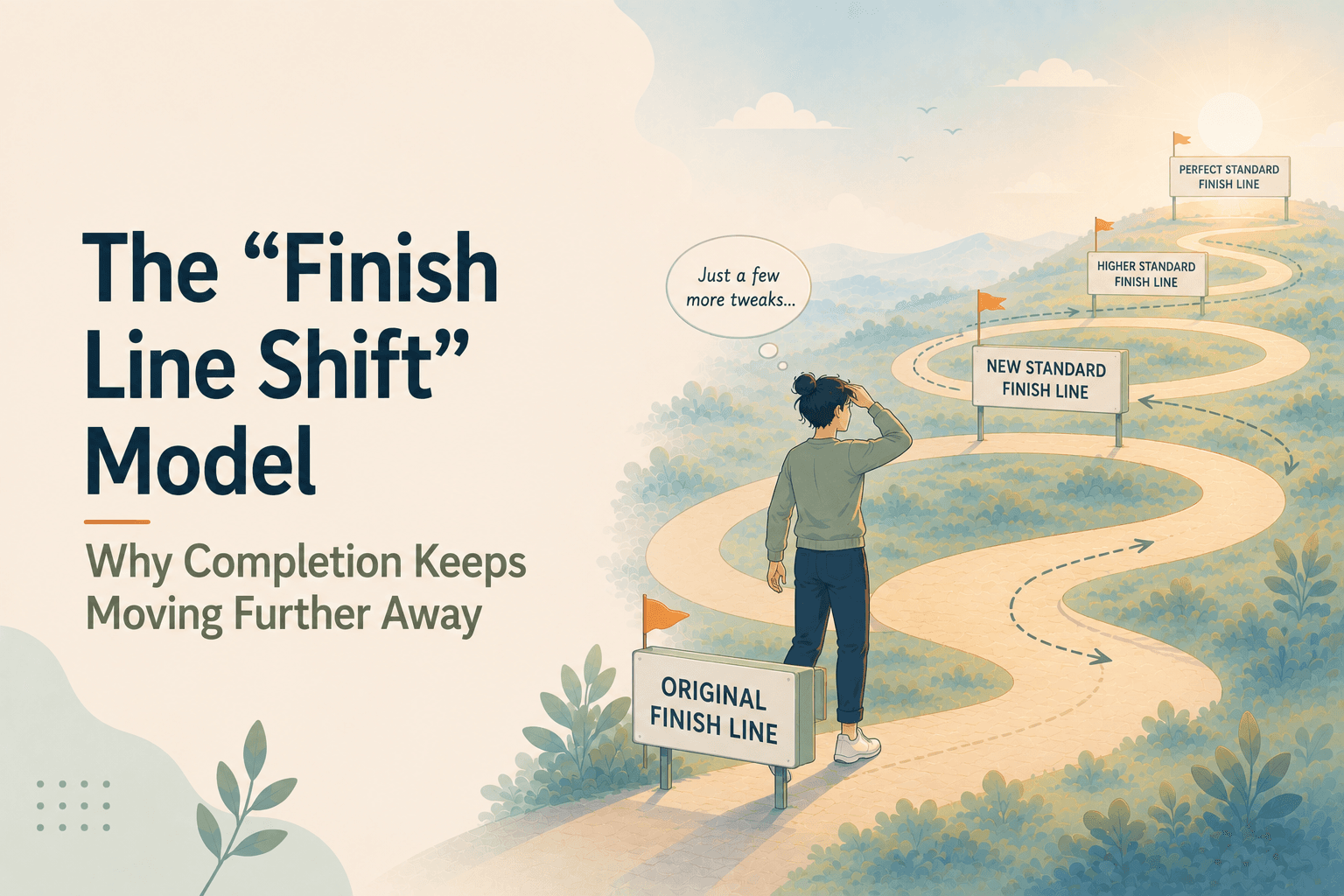
The Finish Line Shift Model: Why Completion Keeps Moving Further Away
The Finish Line Shift Model reveals how changing standards quietly turn nearly finished work into an endless cycle of revision, doubt, and delay.
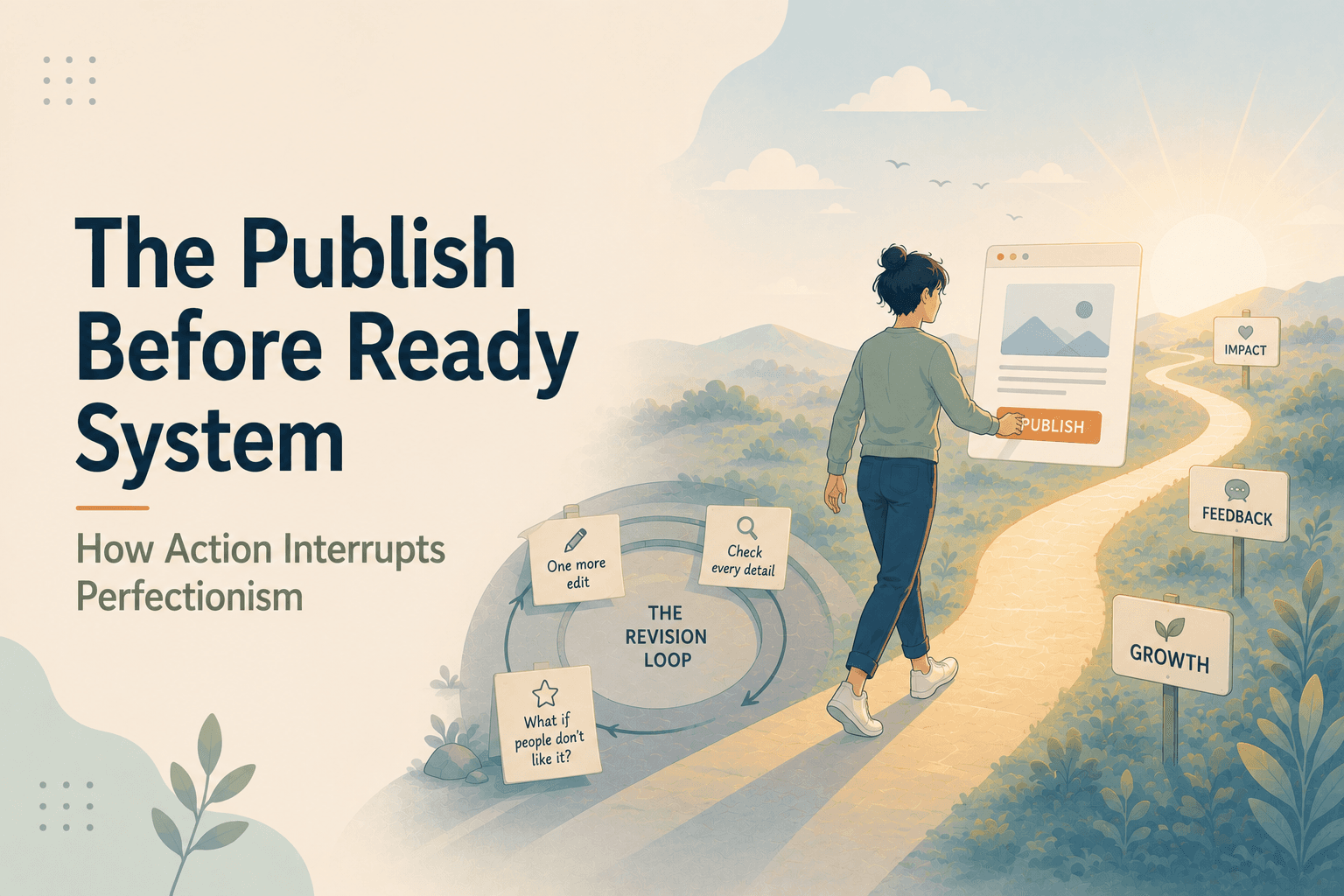
The Publish Before Ready System: How Action Interrupts Perfectionism
The Publish Before Ready System reveals how releasing imperfect work interrupts the hidden loop between overthinking, revision, and avoidance.
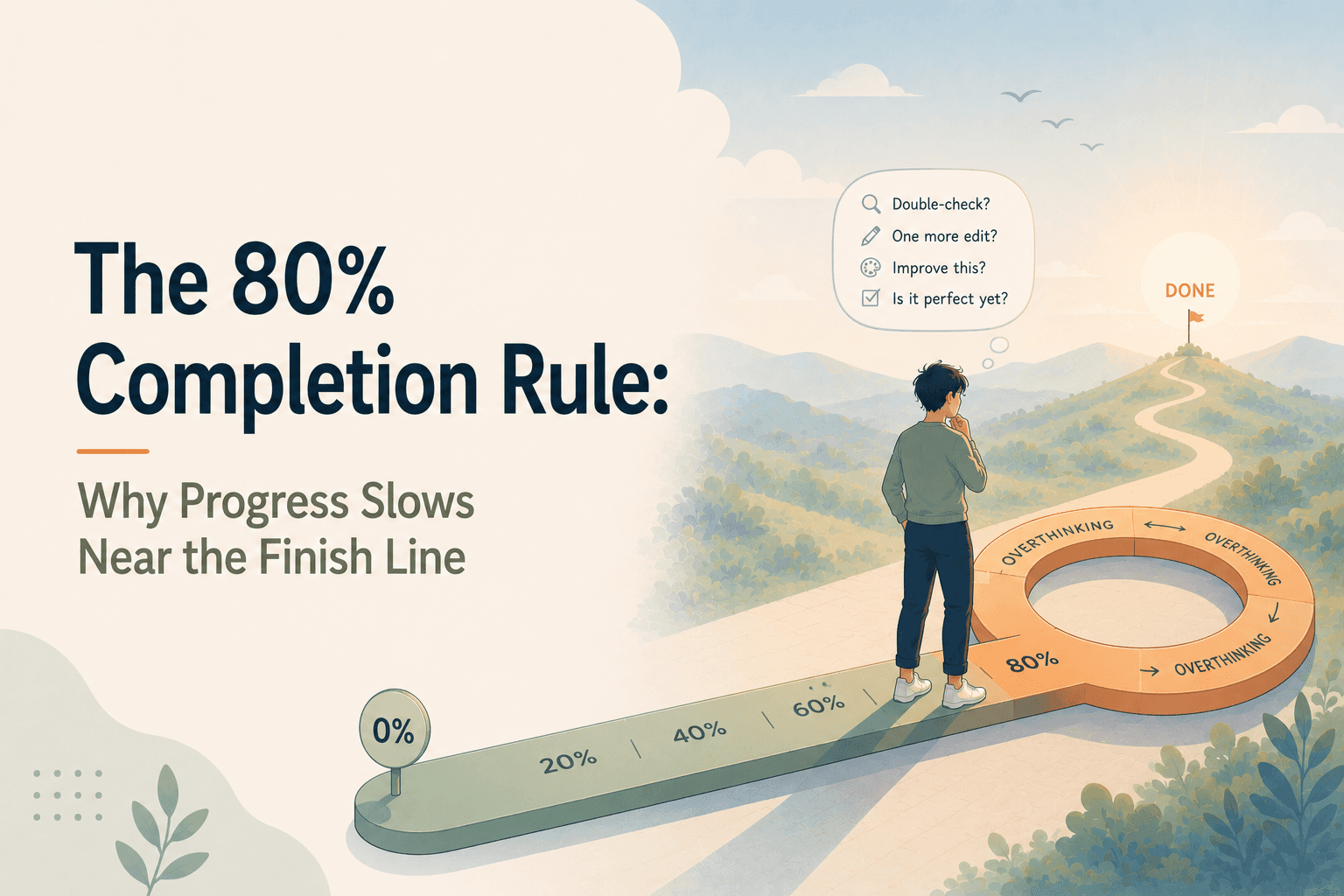
The 80% Completion Rule: Why Progress Slows Near the Finish Line
The 80% Completion Rule reveals why the final stretch of a project often expands when finishing begins to feel more exposing than continuing.
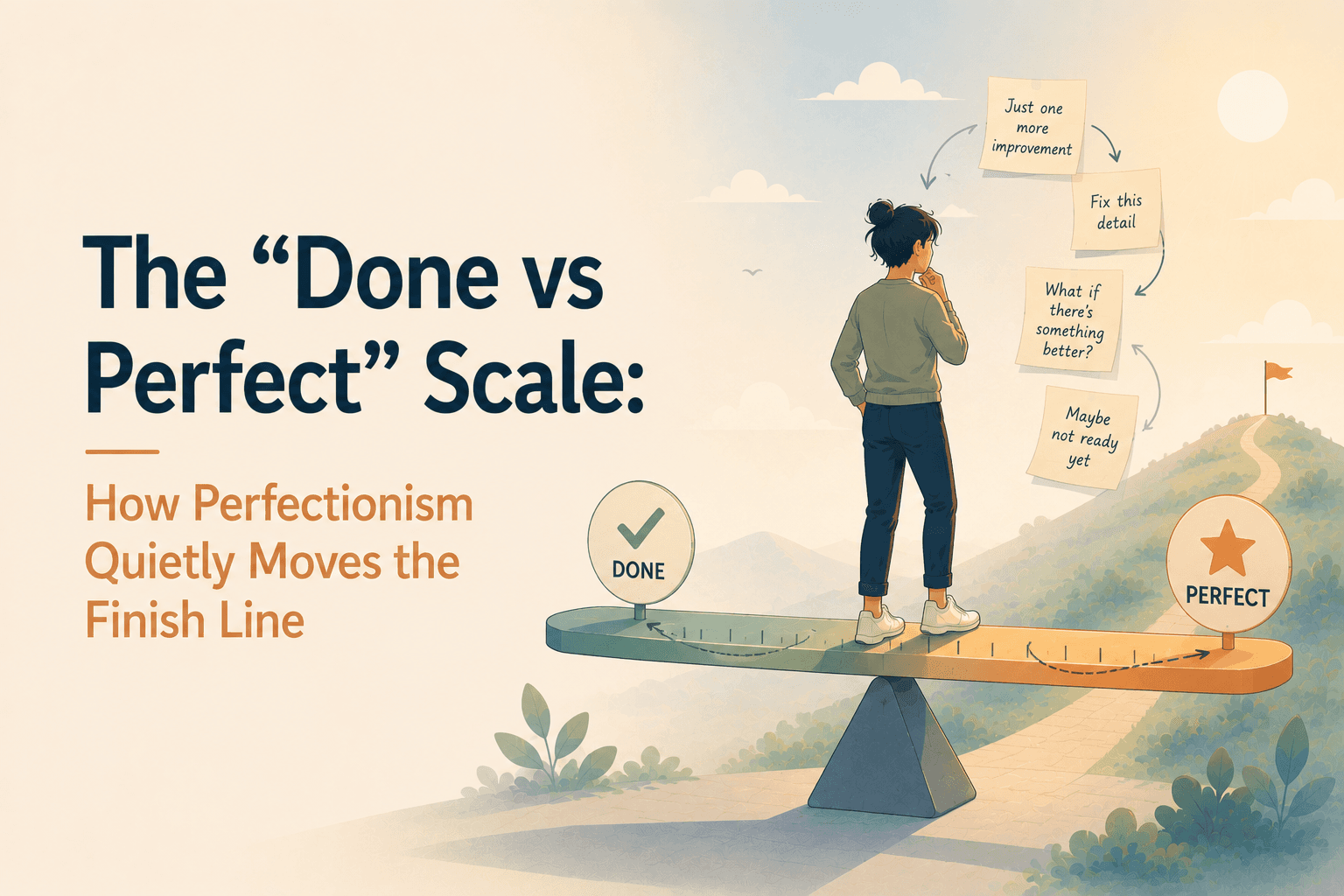
The Done vs Perfect Scale: How Perfectionism Quietly Moves the Finish Line
The Done vs Perfect Scale reveals how useful improvement turns into endless refinement when the mind begins treating completion as emotional risk.
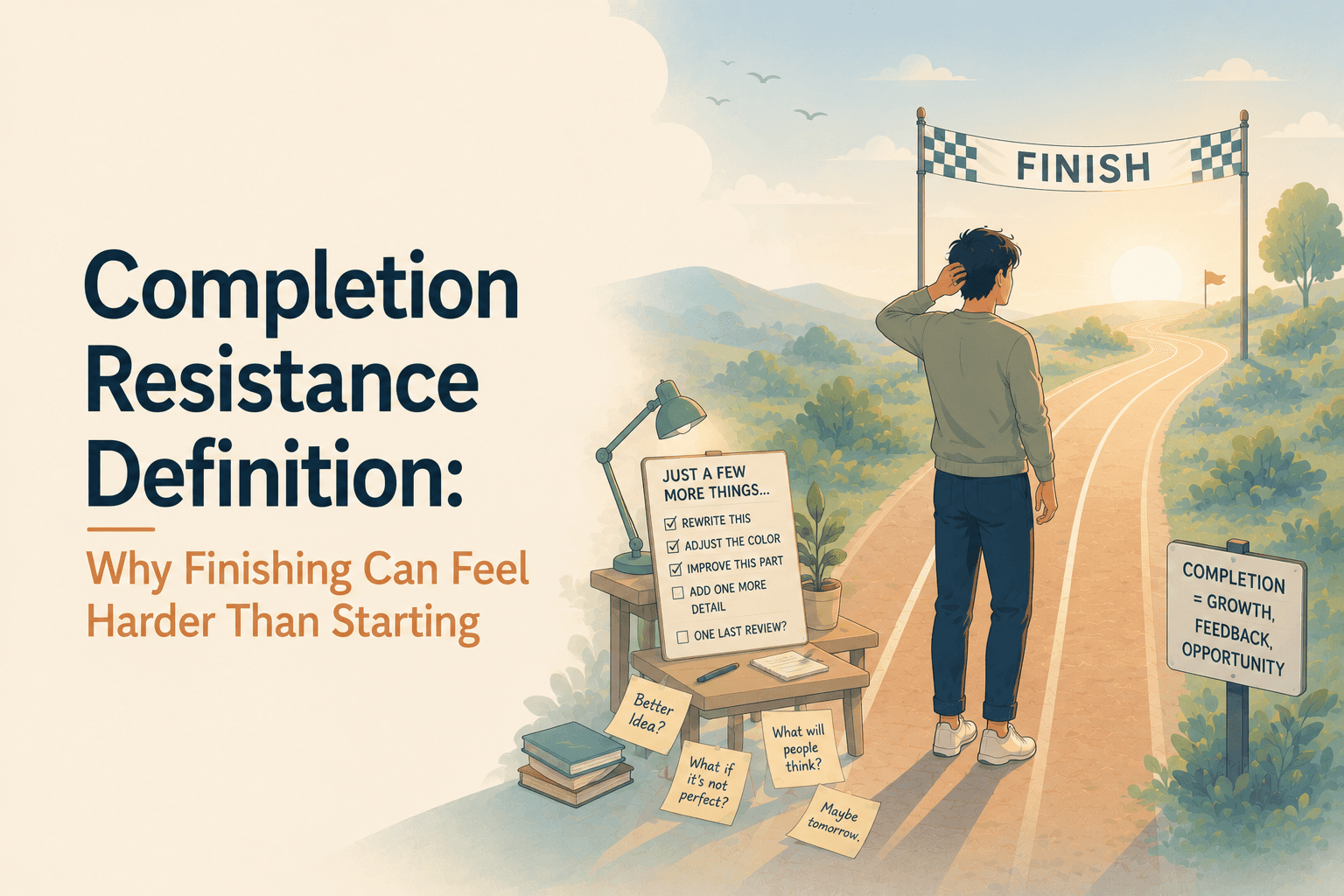
Completion Resistance Definition: Why Finishing Can Feel Harder Than Starting
Completion resistance definition: discover why finishing important work often feels unexpectedly difficult and how the mind quietly resists the moment something becomes real.
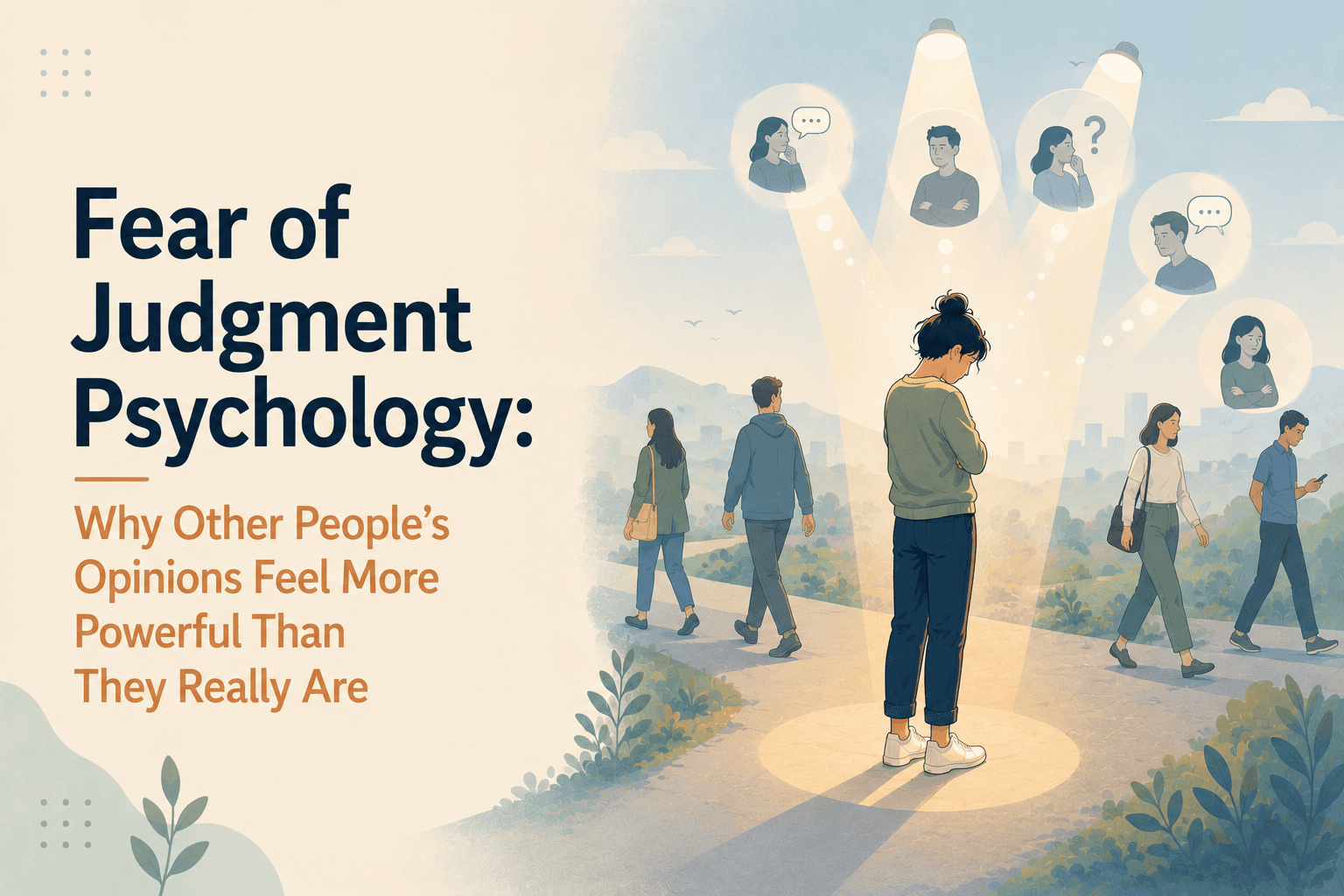
Fear of Judgment Psychology: Why Other People's Opinions Feel More Powerful Than They Really Are
Fear of judgment psychology explains why the human mind often overestimates how much other people notice, evaluate, and remember our mistakes—and how this quietly shapes everyday behavior.
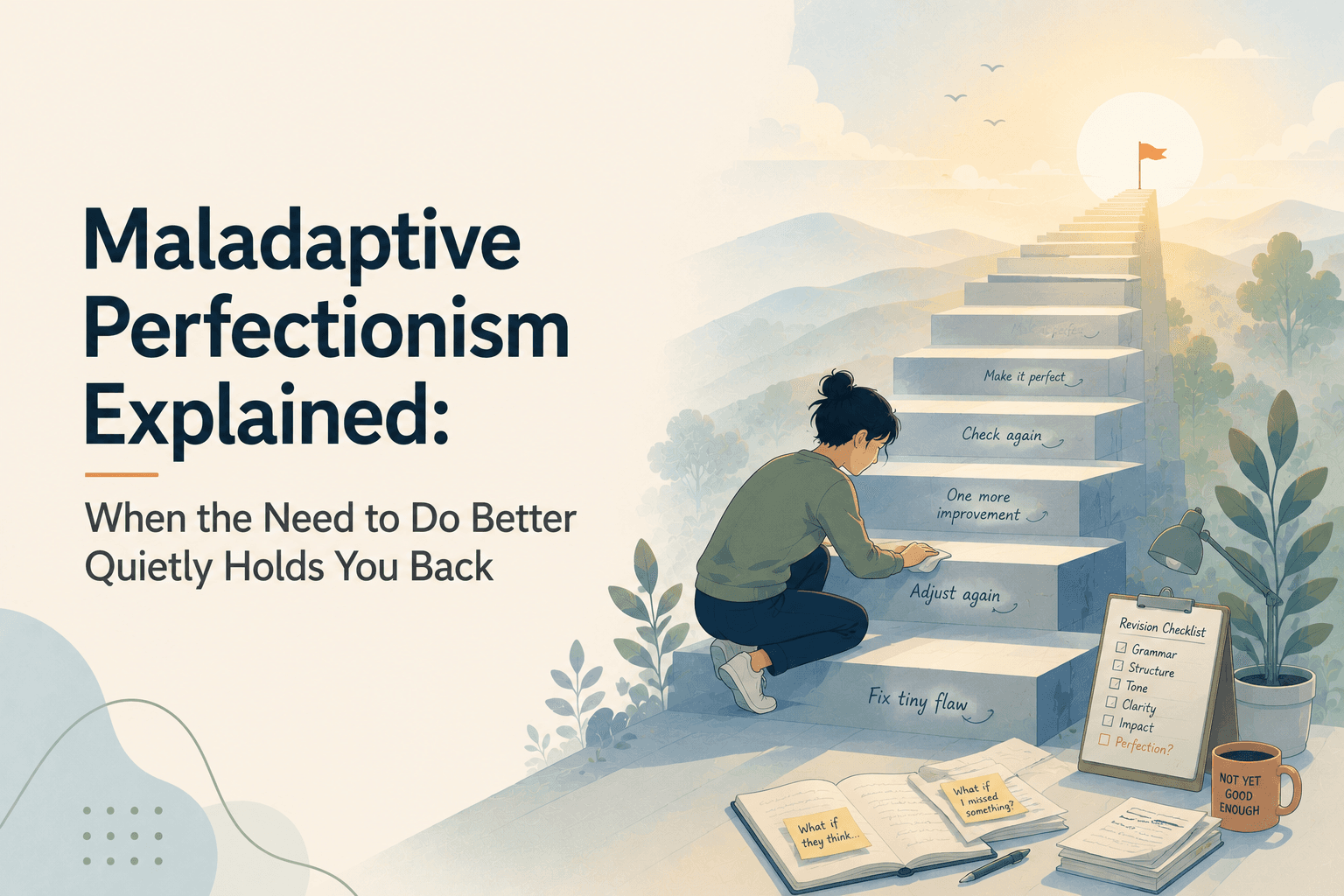
Maladaptive Perfectionism Explained: When the Need to Do Better Quietly Holds You Back
Maladaptive perfectionism explained: discover why the constant pursuit of flawlessness often leads to overthinking, self-criticism, and delayed action instead of meaningful progress.
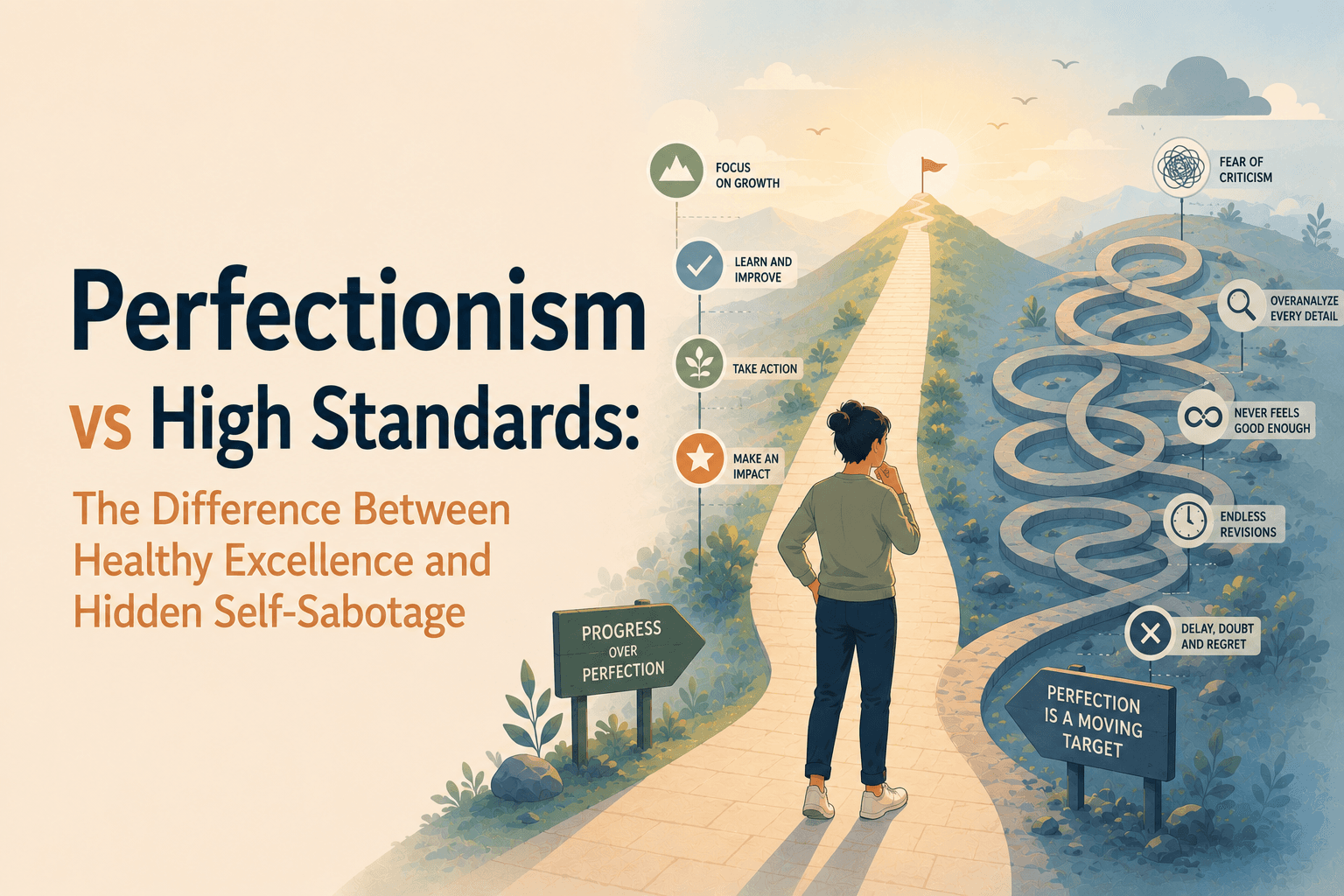
Perfectionism vs High Standards: The Difference Between Healthy Excellence and Hidden Self-Sabotage
Perfectionism vs high standards reveals why two people can care equally about quality yet experience completely different emotional outcomes. Learn how healthy standards encourage growth while perfectionism quietly delays act
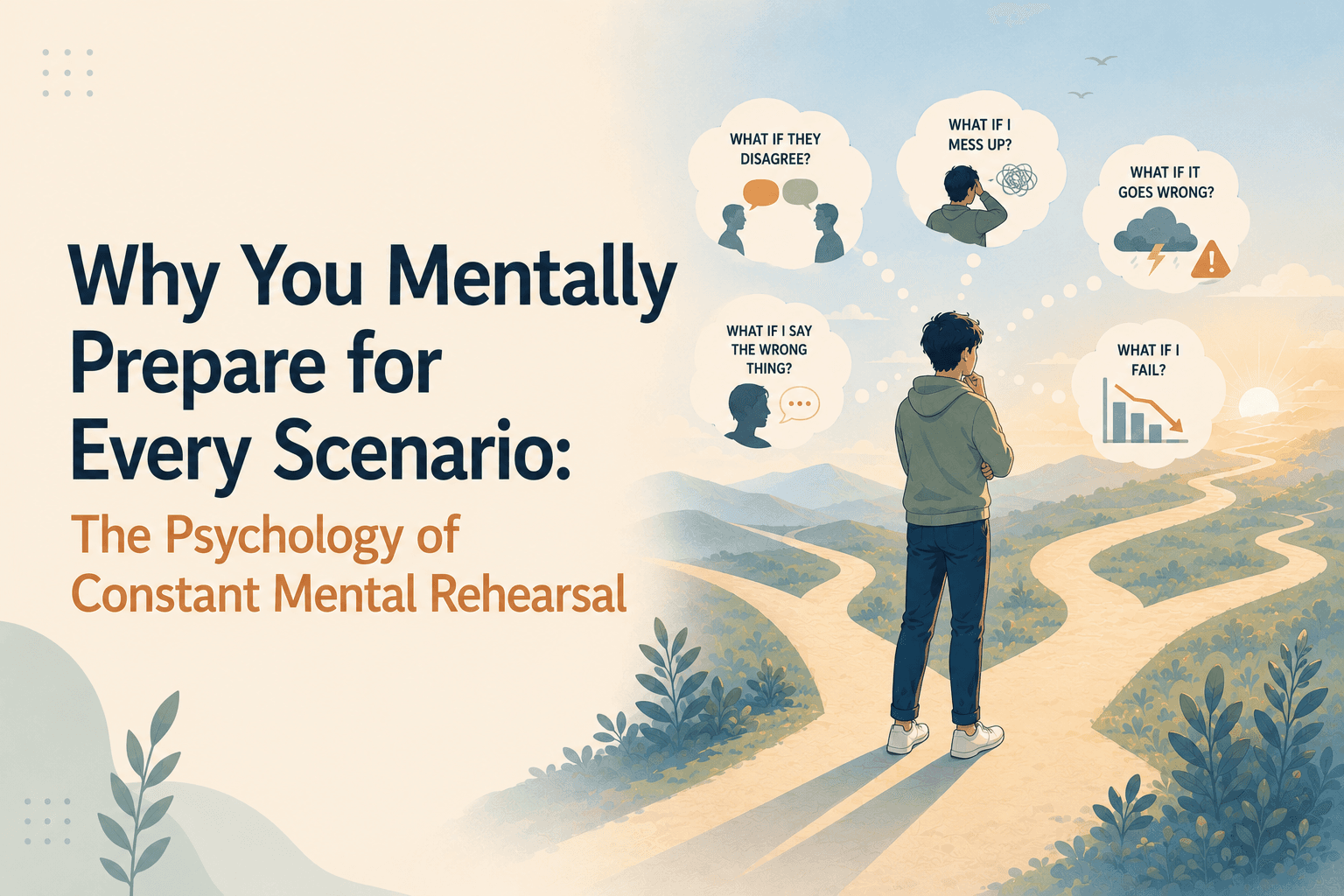
Why You Mentally Prepare for Every Scenario: The Psychology of Constant Mental Rehearsal
Why you mentally prepare for every scenario explains how the brain uses endless planning and imagined outcomes to create a temporary sense of safety while quietly increasing anxiety.
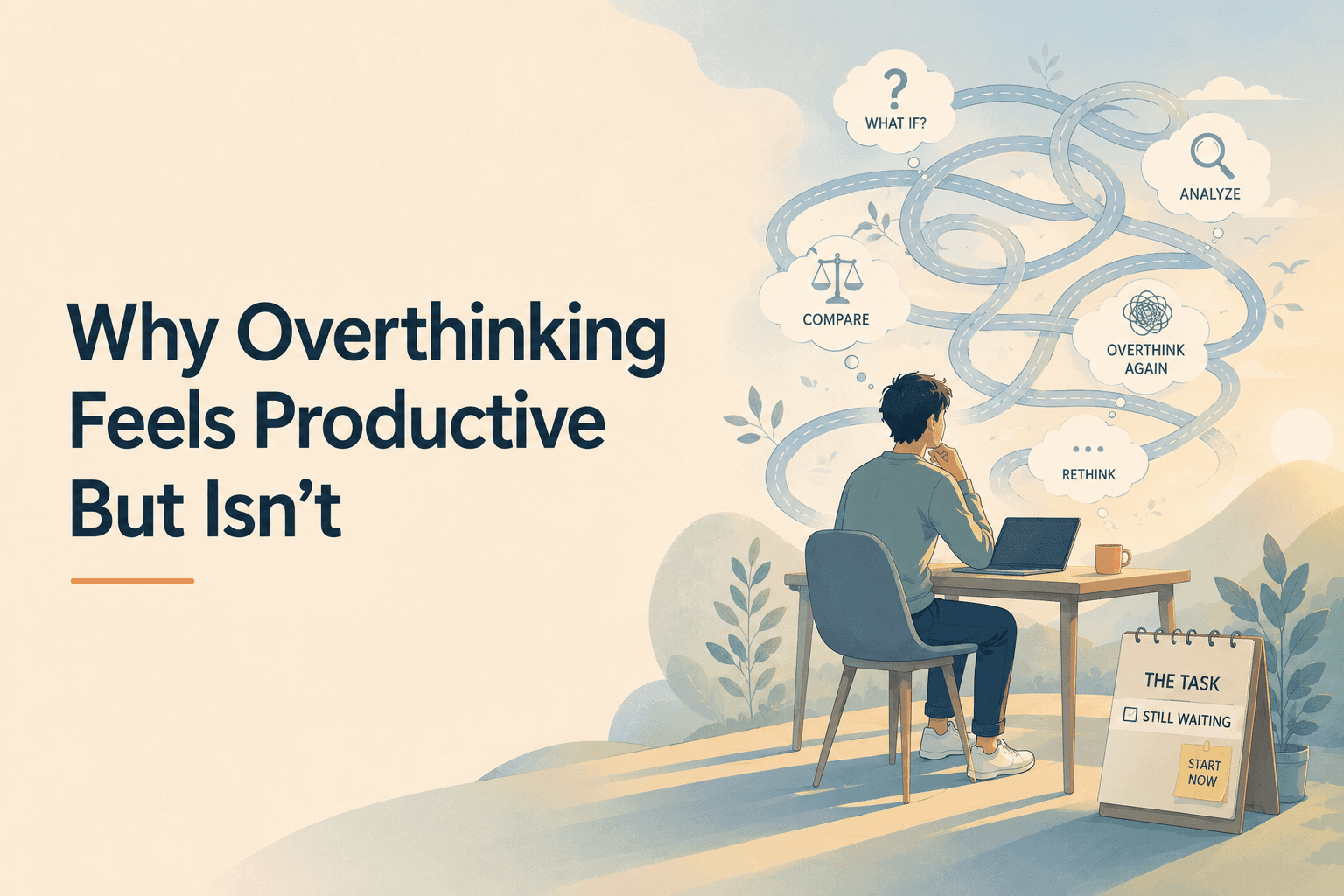
Why Overthinking Feels Productive But Isn't
Why overthinking feels productive but isn't reveals how repeated analysis creates the illusion of progress while quietly delaying decisions, action, and real clarity.
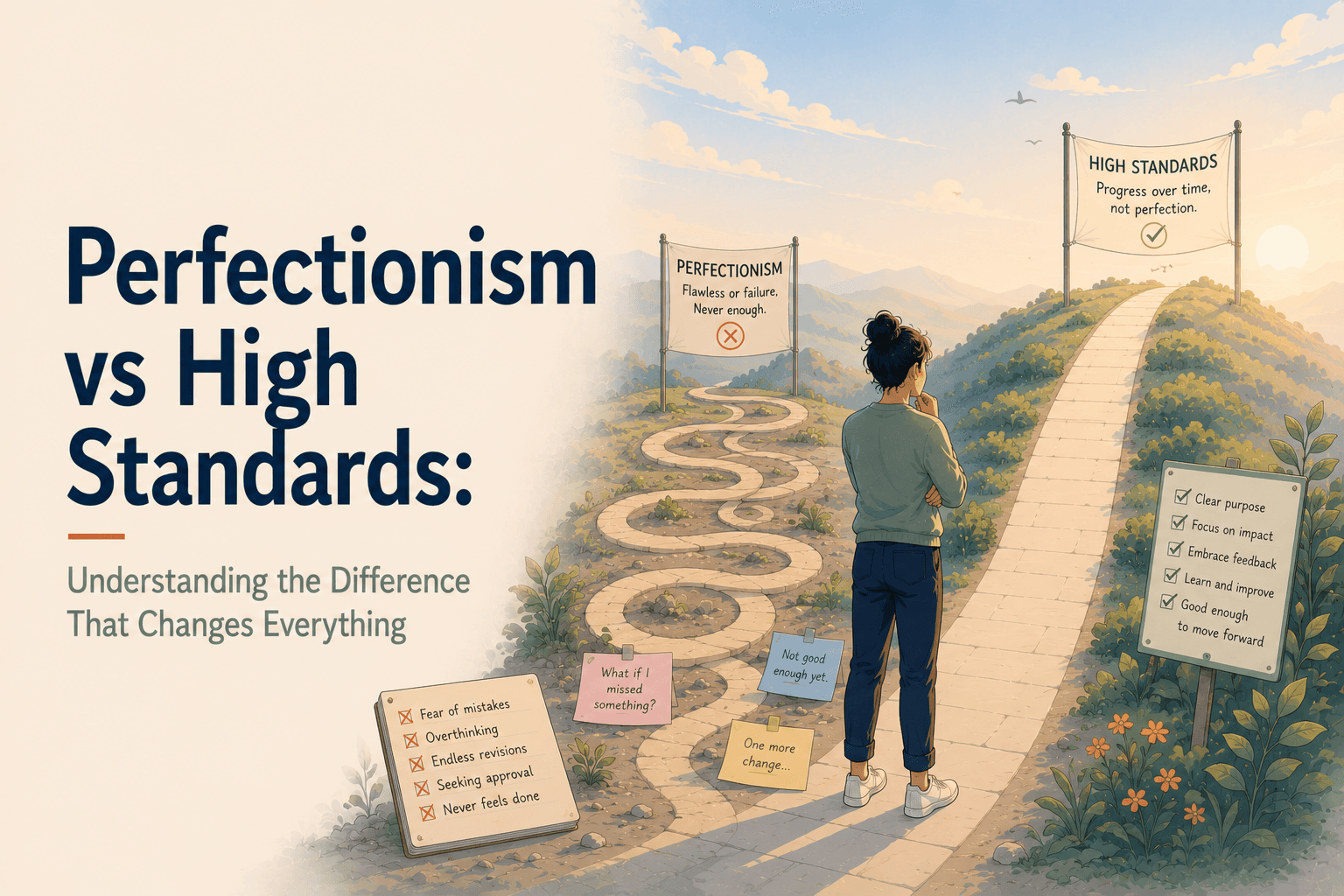
Perfectionism vs high standards explains why striving for excellence can be healthy, while perfectionism quietly turns improvement into overthinking, delay, and self-criticism.
Perfectionism vs High Standards: Understanding the Difference That Changes Everything
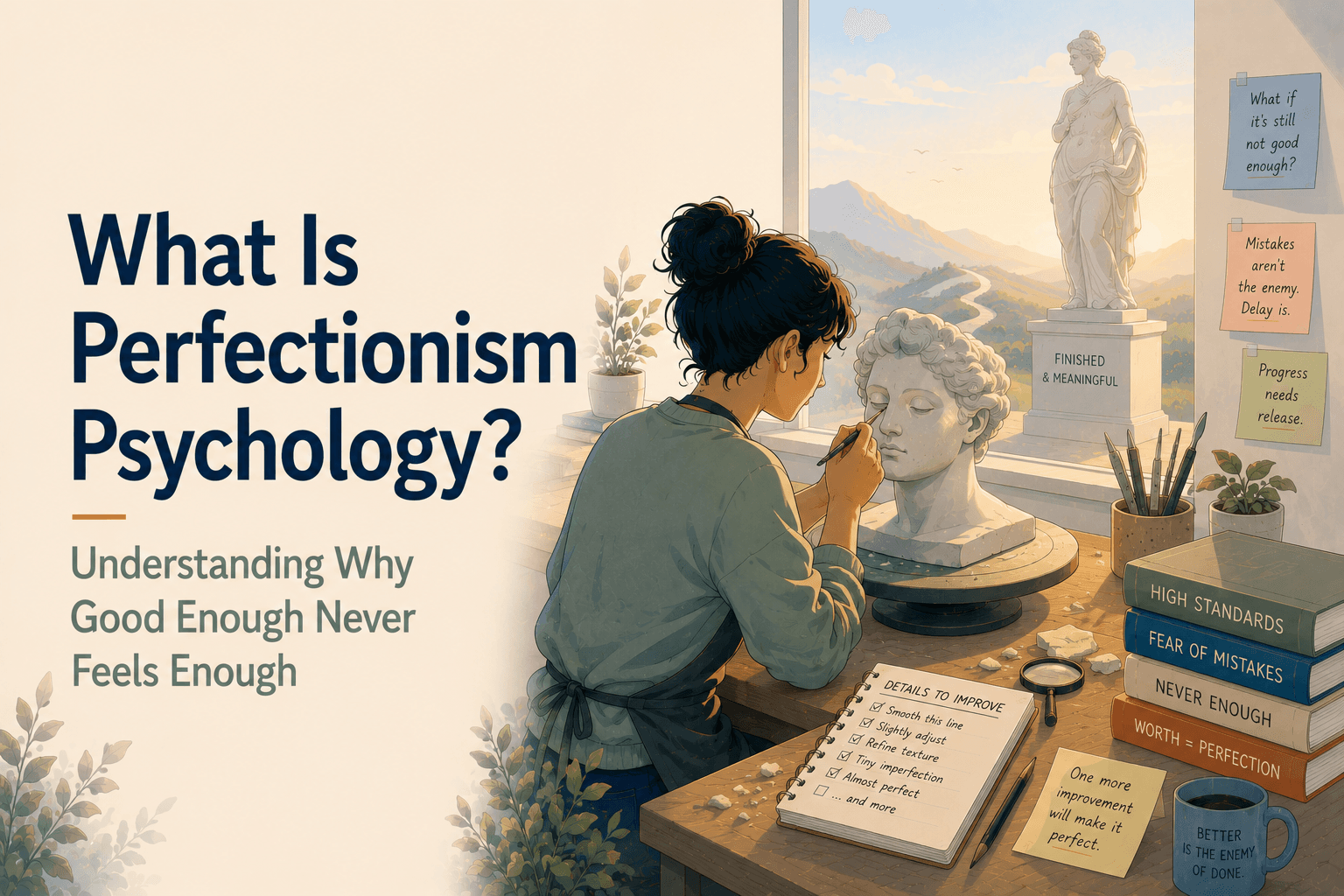
What Is Perfectionism Psychology? Understanding Why Good Enough Never Feels Enough
What is perfectionism psychology? Learn how perfectionism quietly turns healthy standards into endless self-criticism, overthinking, and delayed action
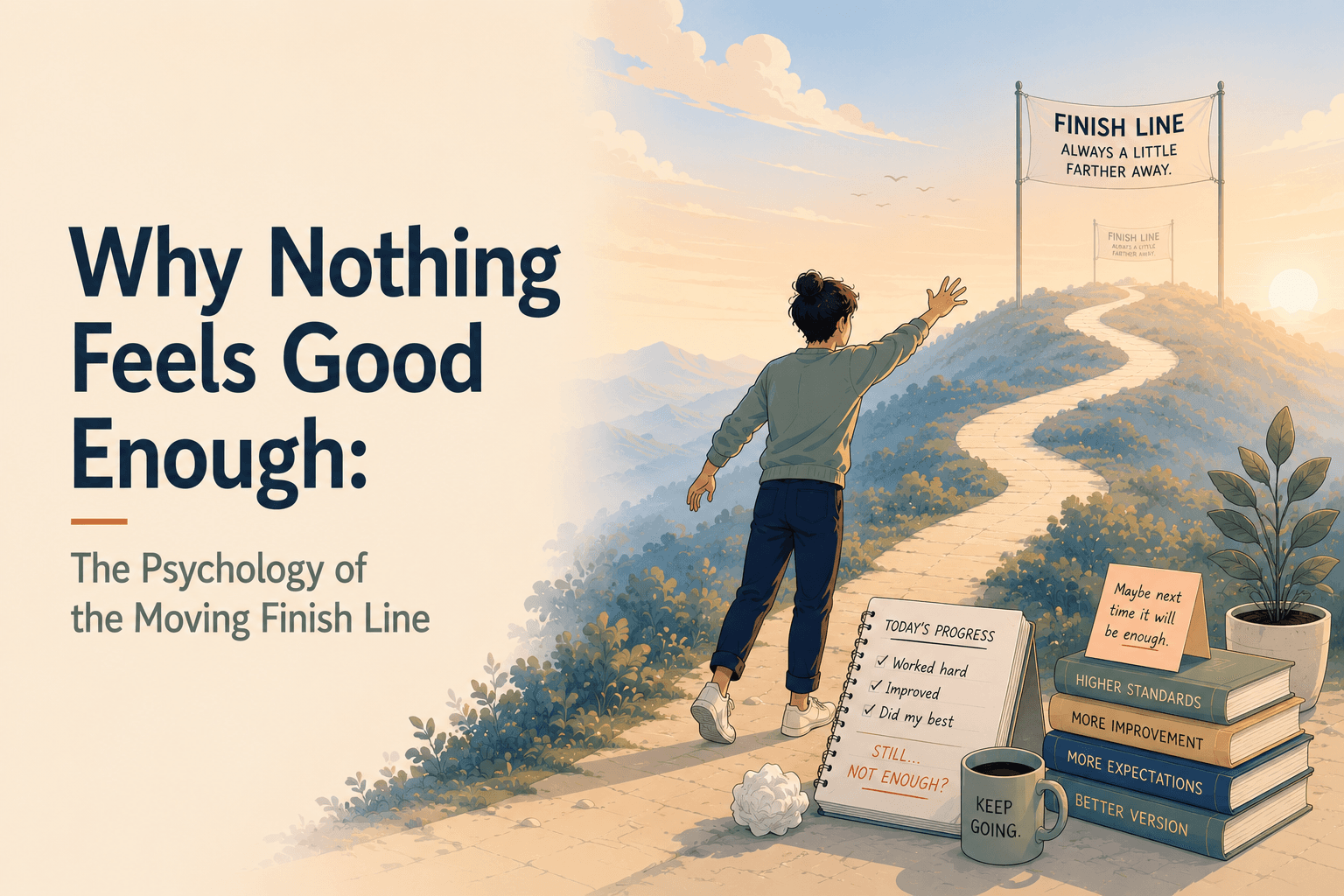
Why Nothing Feels Good Enough: The Psychology of the Moving Finish Line
Why nothing feels good enough explores how perfectionism, self-doubt, and shifting expectations quietly prevent satisfaction, making every achievement feel incomplete.
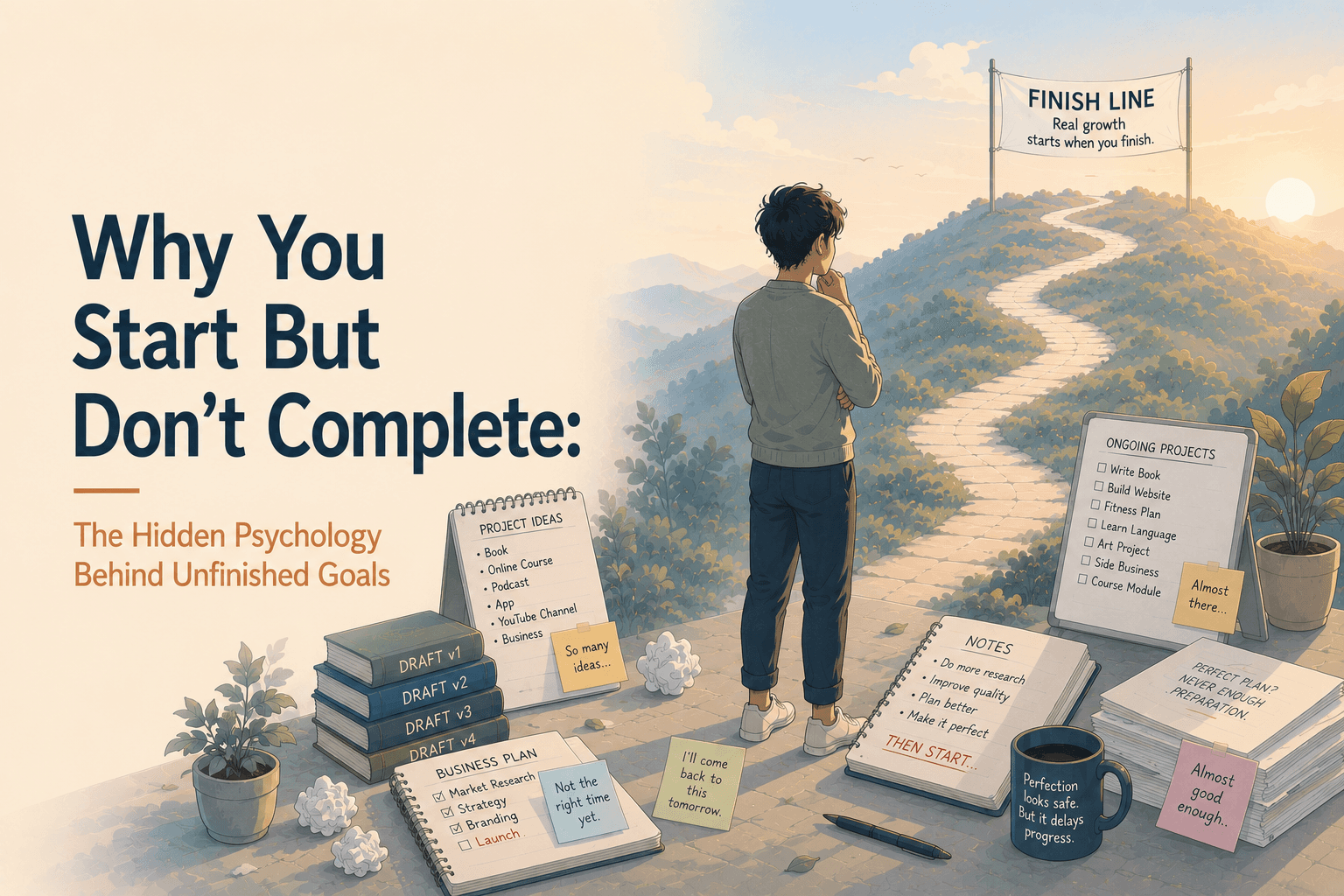
Why You Start But Don't Complete: The Hidden Psychology Behind Unfinished Goals
Why you start but don't complete reveals how fear, perfectionism, and emotional avoidance quietly stop progress long before the finish line.
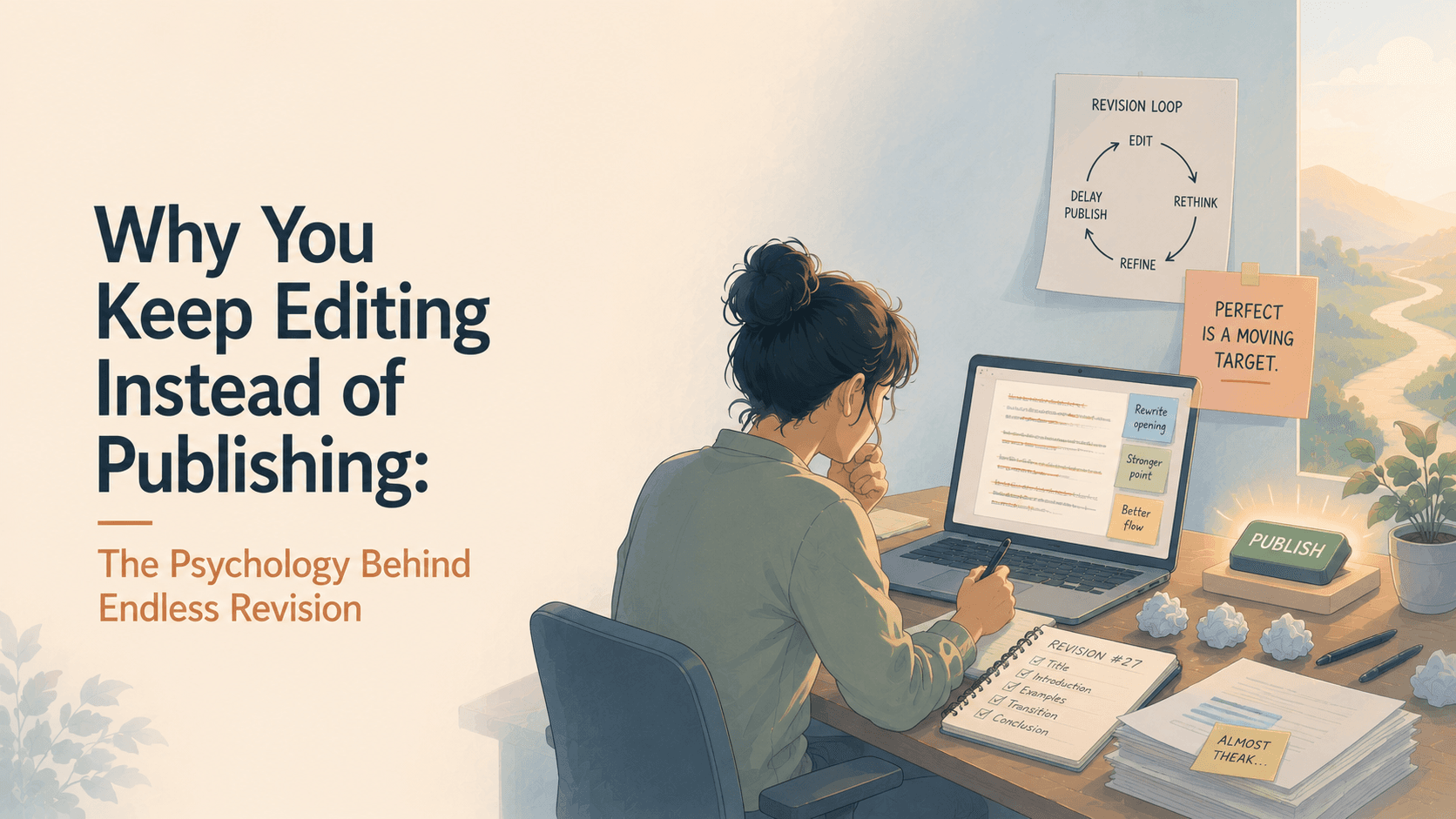
Why You Keep Editing Instead of Publishing: The Psychology Behind Endless Revision
Why you keep editing instead of publishing reveals how perfectionism and fear turn useful revision into a quiet form of avoidance.
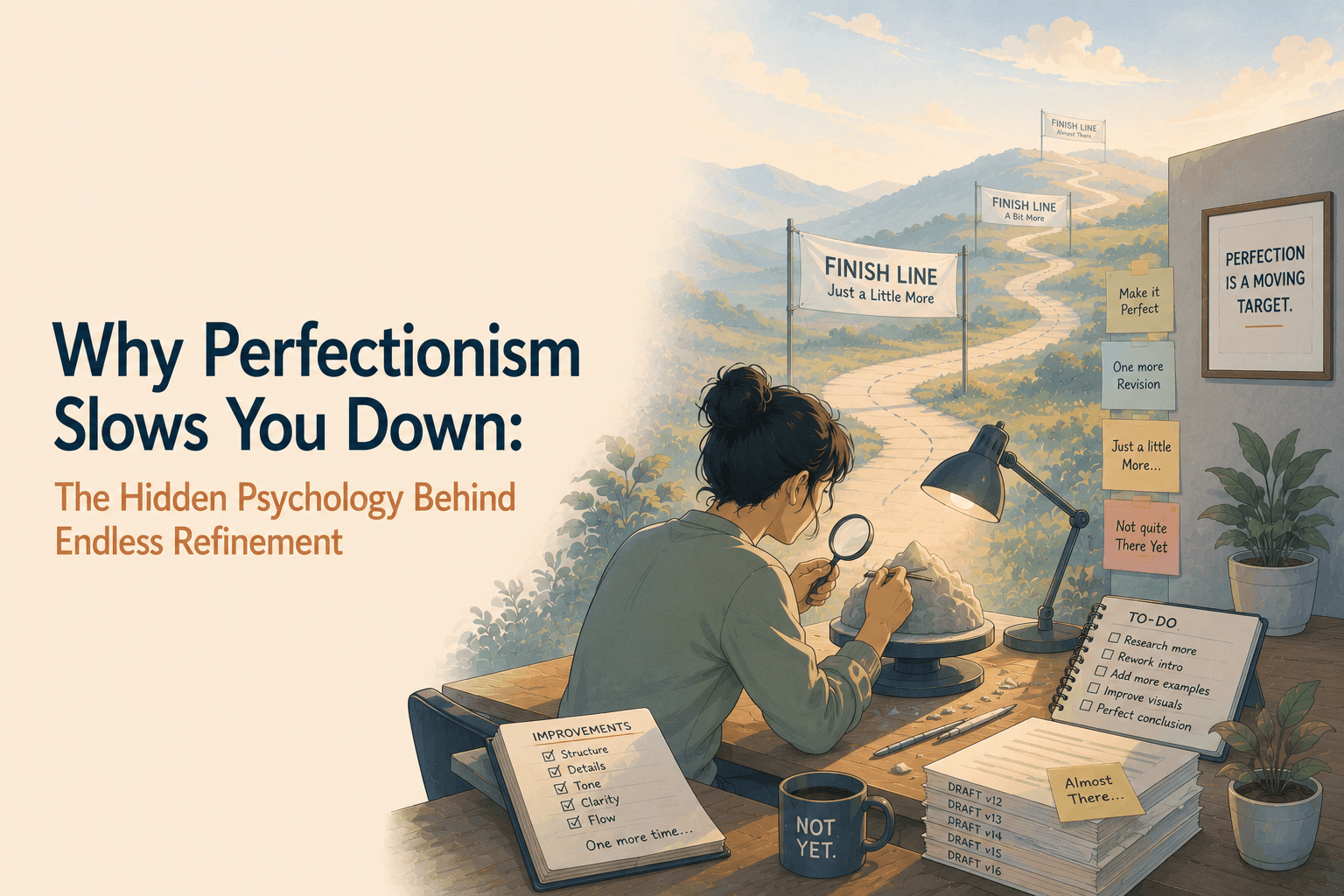
Why Perfectionism Slows You Down: The Hidden Psychology Behind Endless Refinement
Why perfectionism slows you down reveals how the pursuit of flawless results quietly fuels overthinking, delay, and self-sabotage.
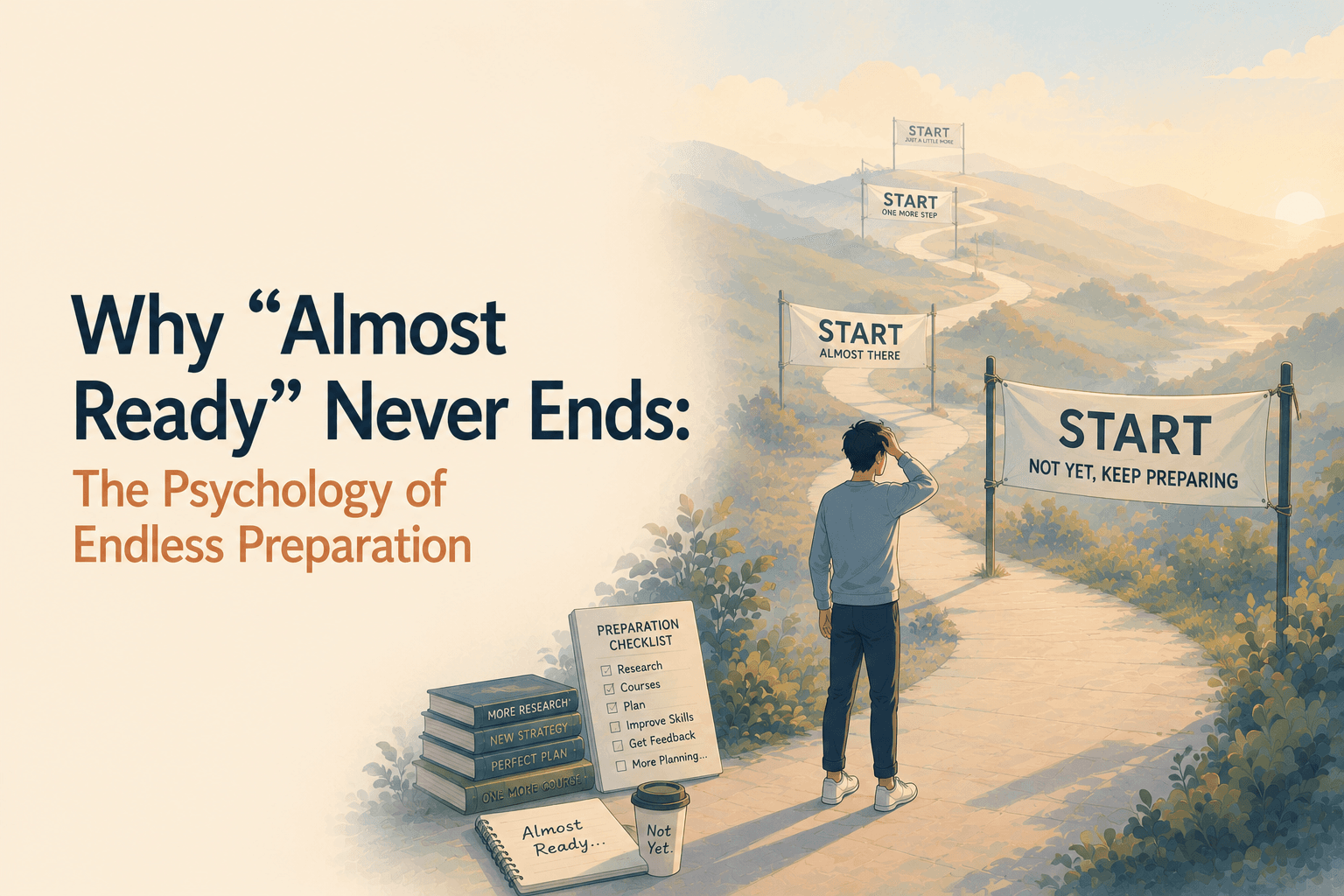
Why “Almost Ready” Never Ends: The Psychology of Endless Preparation
Why almost ready never ends reveals how fear, perfectionism, and overthinking keep moving the point where action finally feels safe.