#imposter syndrome patterns
Curated collection of insights and research specifically labeled under the imposter syndrome patterns taxonomy.
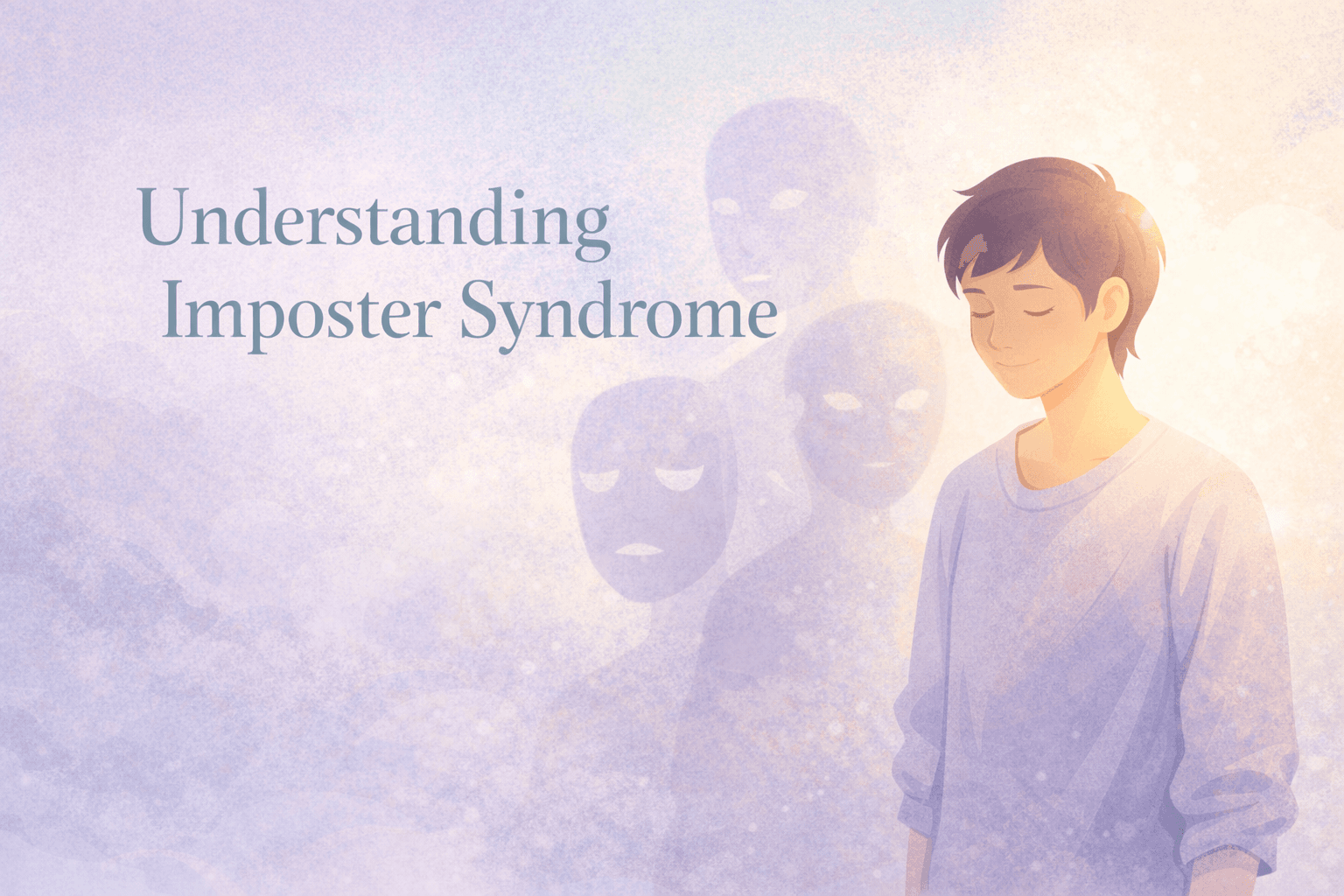

Imposter Syndrome Patterns: Why Competent People Feel Like Frauds
Imposter syndrome patterns quietly shape behavior, making capable people doubt their own ability. Learn the psychology behind it and how to interrupt the cycle.
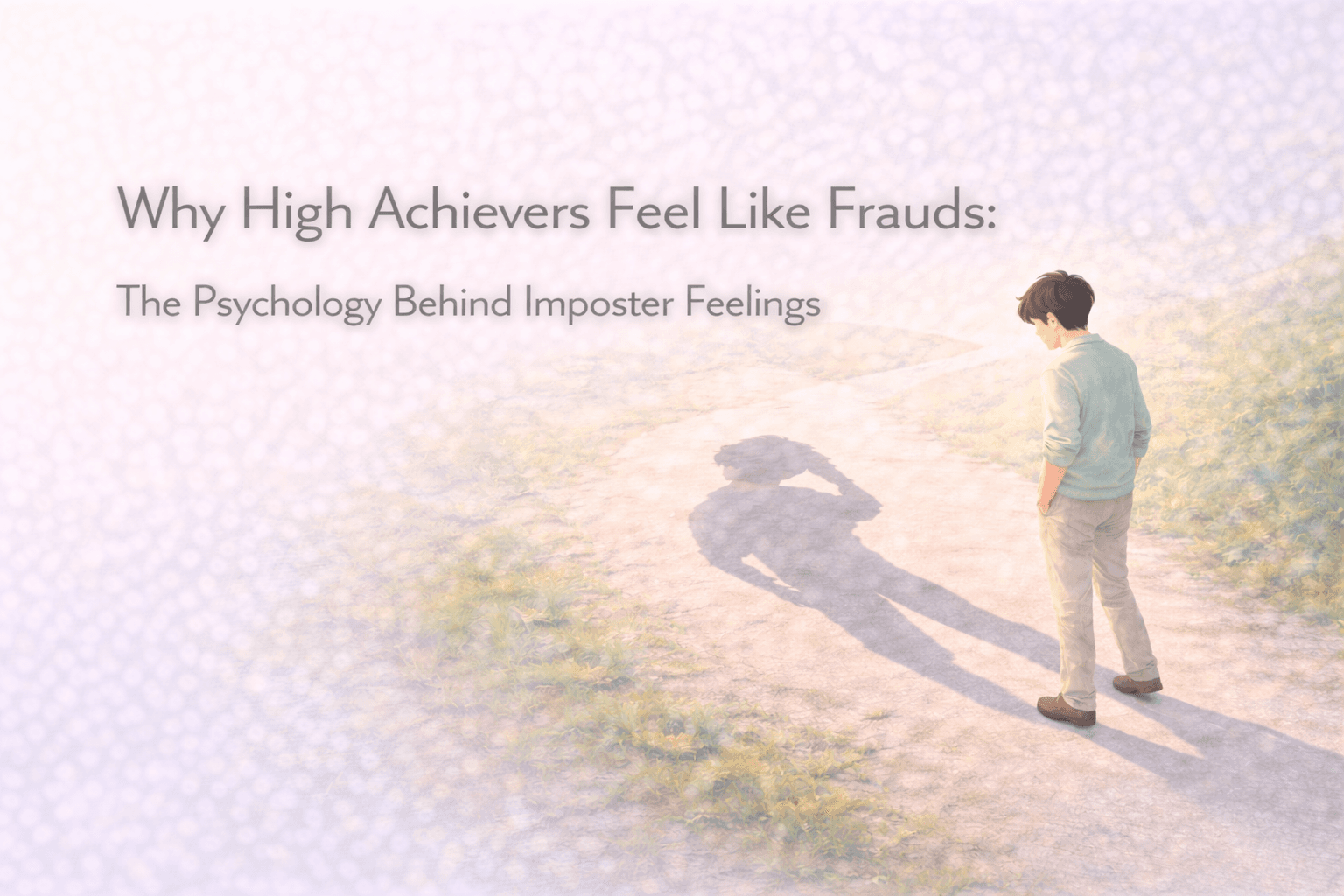
Why High Achievers Feel Like Frauds: The Psychology Behind Imposter Feelings
Why high achievers feel like frauds is a common psychological pattern. Discover how self-doubt, overthinking, and fear of judgment quietly affect confident people.

Why Smart People Experience Imposter Syndrome
Why smart people experience imposter syndrome and how intelligence can quietly trigger self-doubt, overthinking loops, and subtle self-sabotage patterns.
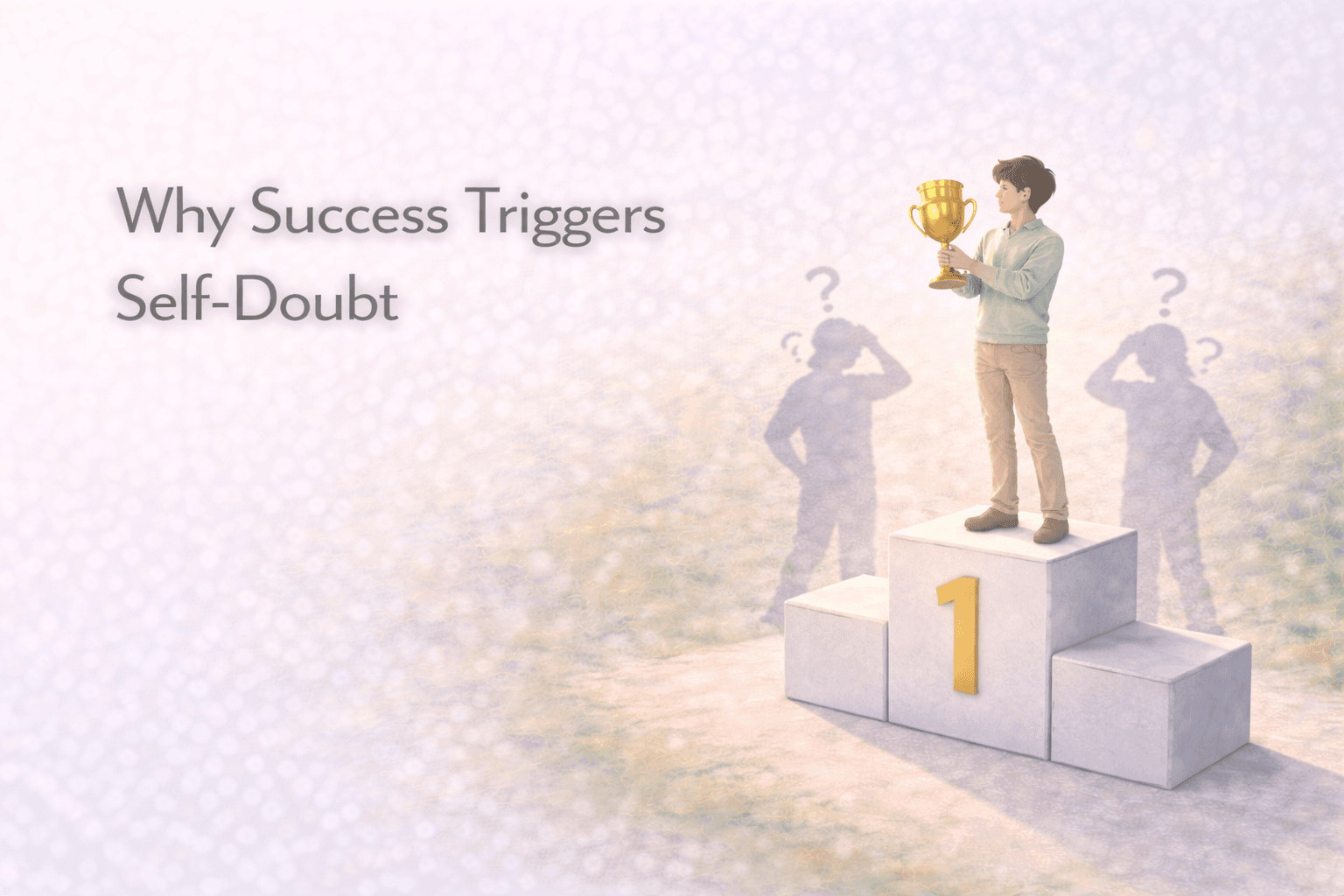
Why Success Triggers Self-Doubt
Why success triggers self-doubt and how achievement can quietly activate overthinking, imposter feelings, and subtle self-sabotage patterns.

What Is Imposter Syndrome Psychology? The Hidden Pattern Behind Self-Doubt
What is imposter syndrome psychology? A reflective look at why capable people quietly doubt their success, how the mind creates overthinking loops, and the subtle psychology behind feeling like a fraud.

imposter syndrome psychology what is imposter syndrome
Why Too Many Choices Create Anxiety
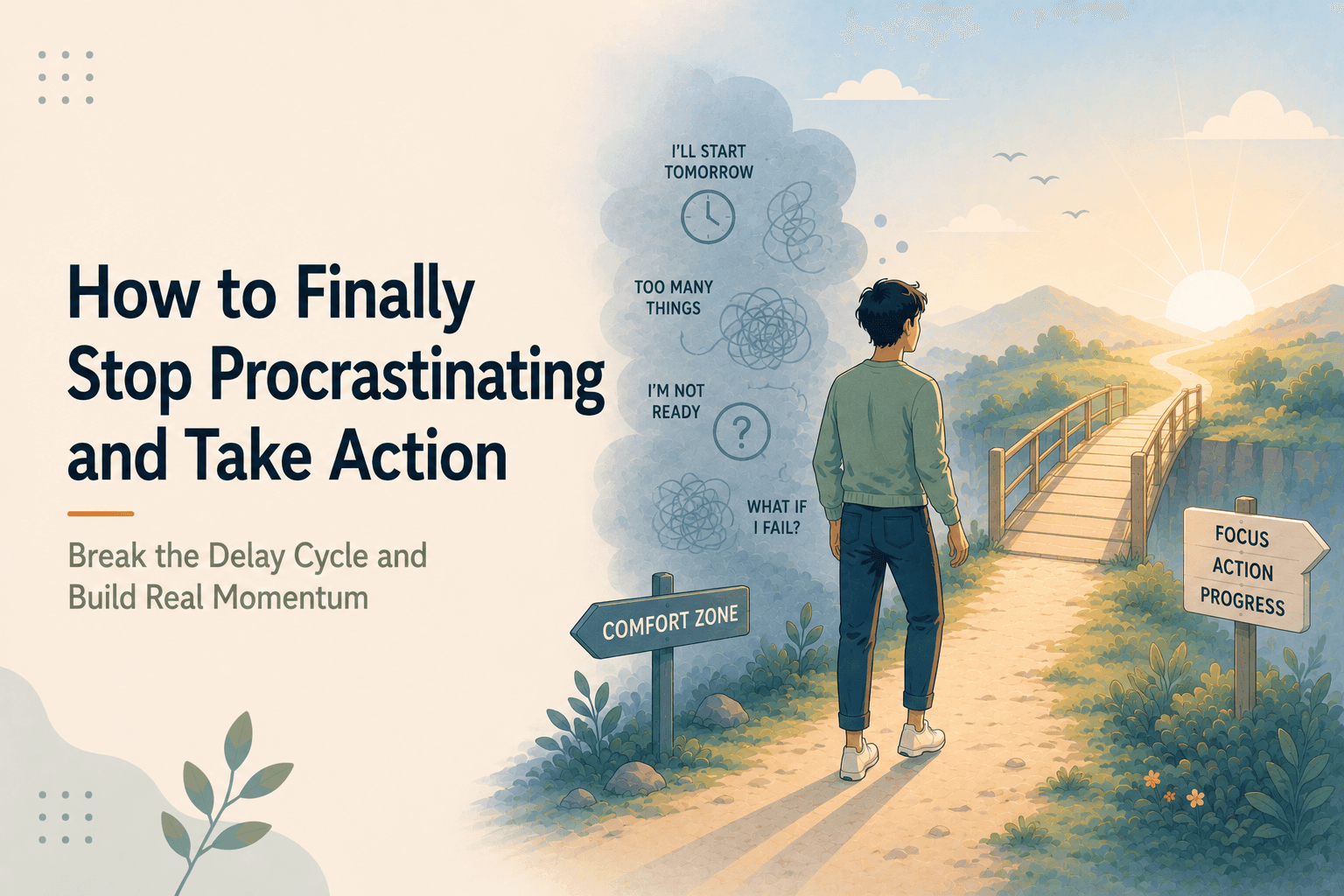
Why You Feel Less Capable Than You Are
Why you feel less capable than you are reveals how self-monitoring and doubt can quietly distort your view of abilities you already possess.
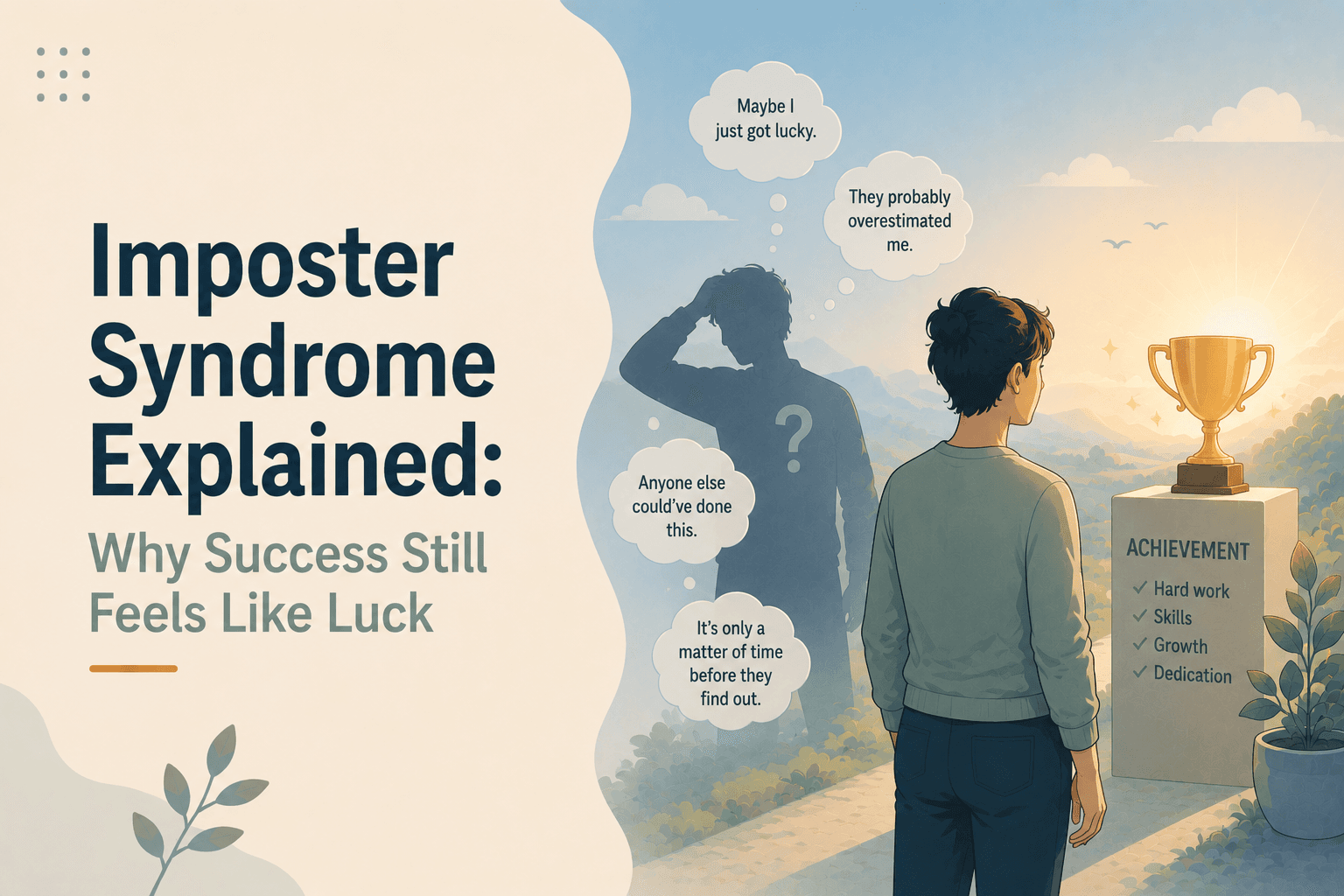
Imposter Syndrome Explained: Why Success Still Feels Like Luck
Imposter syndrome explained reveals why capable people often dismiss their achievements, fear being exposed, and quietly distrust their own success.
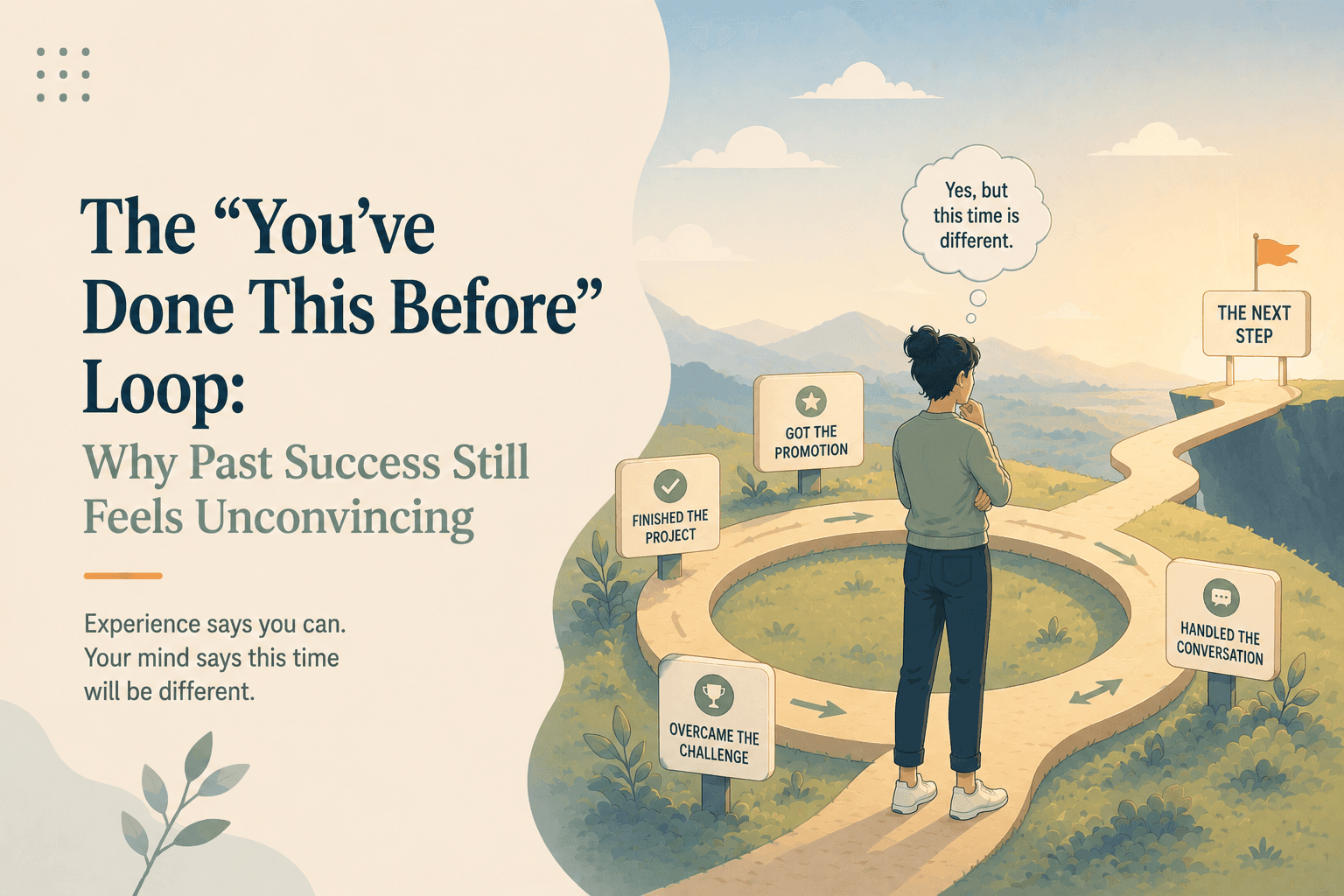
The “You’ve Done This Before” Loop: Why Past Success Still Feels Unconvincing
The You’ve Done This Before Loop reveals why past success briefly calms self-doubt, yet fails to make the next uncertain moment feel easier.