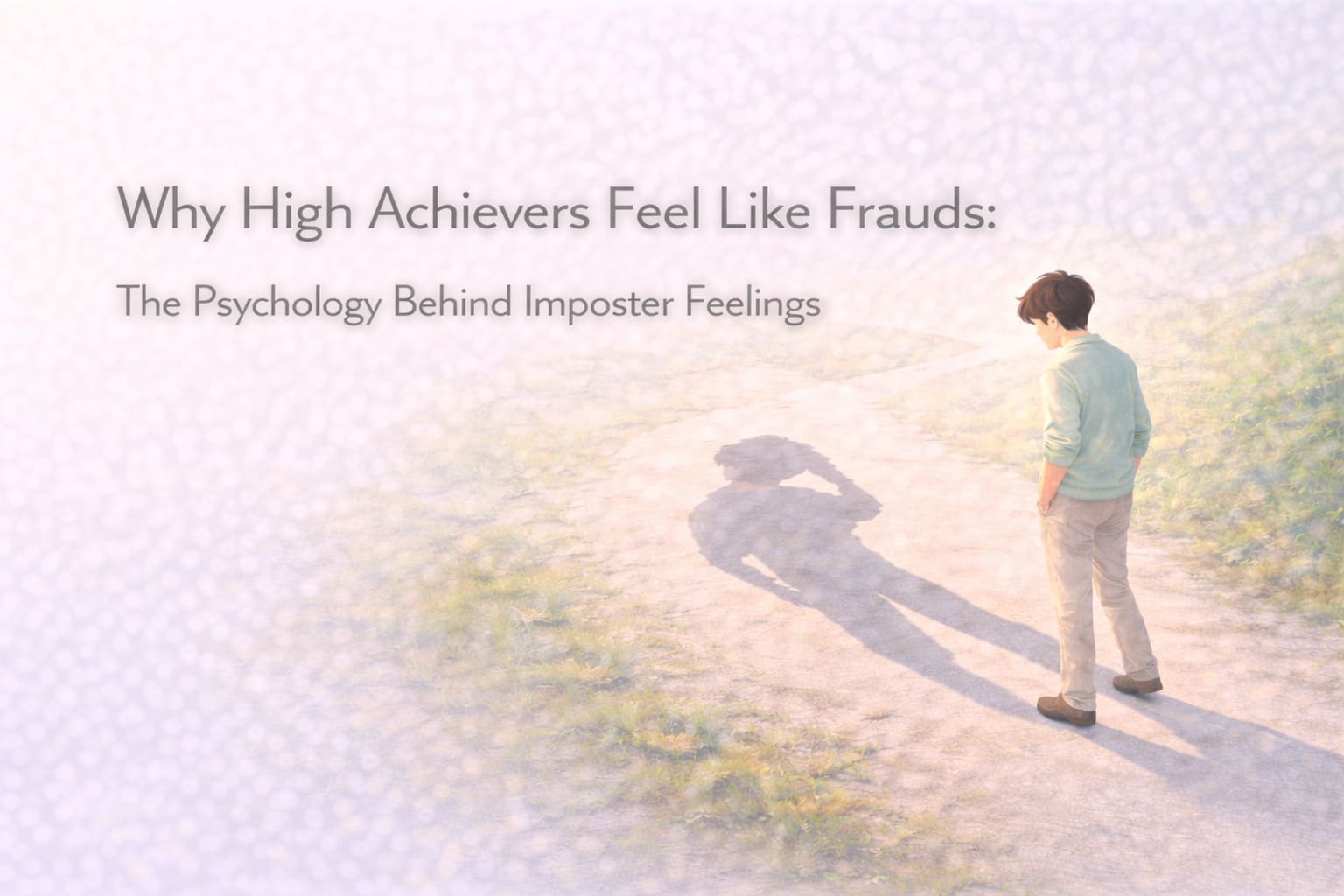
Why High Achievers Feel Like Frauds
Why high achievers feel like frauds is a question that often appears quietly in the mind of capable people.
You accomplish something meaningful.
You finish a project.
You receive recognition.
Someone compliments your work.
But instead of feeling confident, a small thought appears.
Maybe that was luck.
Maybe they expect more than I can deliver.
Maybe next time they’ll realize I’m not as capable as they think.
If this experience sounds familiar, you are not alone.
This is one reason why high achievers often feel like frauds, even when their results clearly show competence.
The mind sometimes interprets success in surprising ways.
What This Behavior Actually Is
Why high achievers feel like frauds often relates to a psychological pattern known as imposter thinking.
This pattern appears when someone struggles to internalize their achievements.
Even when evidence shows success, the mind looks for other explanations.
Luck.
Timing.
External help.
Instead of recognizing their own ability, high achievers sometimes explain success as temporary or accidental.
The result is a strange internal experience.
Outward success.
Inward doubt.
This does not mean someone lacks skill.
It simply means their internal narrative has not caught up with their achievements.
Over time, this pattern can connect with deeper self-sabotage behaviors, especially when doubt begins influencing decisions.
If you'd like to understand those broader patterns, the full framework is explored here:
The Complete Guide to Self-Sabotage Patterns
Why the Brain Does This
Understanding why high achievers feel like frauds requires looking at how the brain processes identity and expectations.
When someone performs well consistently, their standards often rise as well.
Instead of focusing on what worked, the mind begins focusing on what could have been better.
Several psychological mechanisms reinforce this pattern.
High internal standards
High achievers often notice flaws others do not see.
Instead of celebrating results, they analyze imperfections.
Comparison bias
People compare their internal struggles to other people's external results.
Because you see your own effort and uncertainty, others may appear more confident than they actually are.
Fear of future failure
Success can increase expectations.
The brain begins worrying about maintaining that standard.
Overthinking loops
When the mind begins analyzing past performance repeatedly, doubt can increase instead of decreasing.
These loops often connect to patterns described here:
Thinking becomes focused on potential mistakes rather than actual capability.
The Hidden Cost
Feeling like a fraud may seem like a private thought.
But over time, the pattern can influence behavior.
High achievers sometimes hesitate before pursuing larger opportunities.
They may prepare excessively before acting.
They may downplay their accomplishments when speaking with others.
Several subtle effects appear.
Opportunities feel intimidating
New challenges feel like potential exposure instead of growth.
Confidence fluctuates
External success does not always translate into internal belief.
Energy drains from constant self-evaluation
The mind continues reviewing performance long after the work is finished.
Progress slows
When doubt grows stronger than action, opportunities may remain unexplored.
This is how imposter thinking can quietly evolve into forms of self-sabotage behavior.
Not because someone lacks ability.
But because their internal narrative questions their own competence.
A Small Shift That Changes the Pattern
Breaking the pattern behind why high achievers feel like frauds often begins with awareness.
Once the mind recognizes the habit of dismissing success, the pattern becomes easier to interrupt.
Several small shifts can help.
Separate effort from identity
A single outcome does not define your entire ability.
Performance is part of learning, not a permanent label.
Notice the evidence
When the mind says success was luck, look at the pattern of results.
Consistent outcomes rarely happen by accident.
Recognize the role of growth
Every skill improves through practice.
Expecting perfection immediately creates unnecessary pressure.
Over time, the brain begins learning something important.
Confidence grows from recognizing progress, not from eliminating every doubt.
Final Reflection
Why high achievers feel like frauds reveals something interesting about the human mind.
The brain does not simply measure success.
It interprets it.
Sometimes the interpretation focuses on improvement.
Sometimes it focuses on mistakes.
Sometimes it questions the achievement entirely.
High achievers often care deeply about doing things well.
That awareness helps them grow.
But the same awareness can sometimes turn inward.
If you look closely, the pattern begins to appear.
Moments where the mind dismisses success too quickly.
Moments where doubt speaks louder than evidence.
And once you begin noticing that pattern, something subtle changes.
You start seeing those thoughts not as truth.
But as a familiar mental habit the brain has learned to repeat.
Q: Why do high achievers feel like frauds?
A: Many high achievers struggle to internalize success. Instead of recognizing their ability, they may attribute achievements to luck or external factors.
Q: Is feeling like a fraud related to imposter syndrome?
A: Yes. Imposter syndrome describes the pattern where capable people doubt their competence despite clear evidence of success.
Q: Why do intelligent people experience imposter feelings?
A: People who think deeply about their work often focus on flaws and improvements, which can increase self-doubt.
Q: How can someone stop feeling like a fraud?
A: Recognizing achievements, tracking progress, and separating mistakes from identity can gradually reduce imposter thinking.
