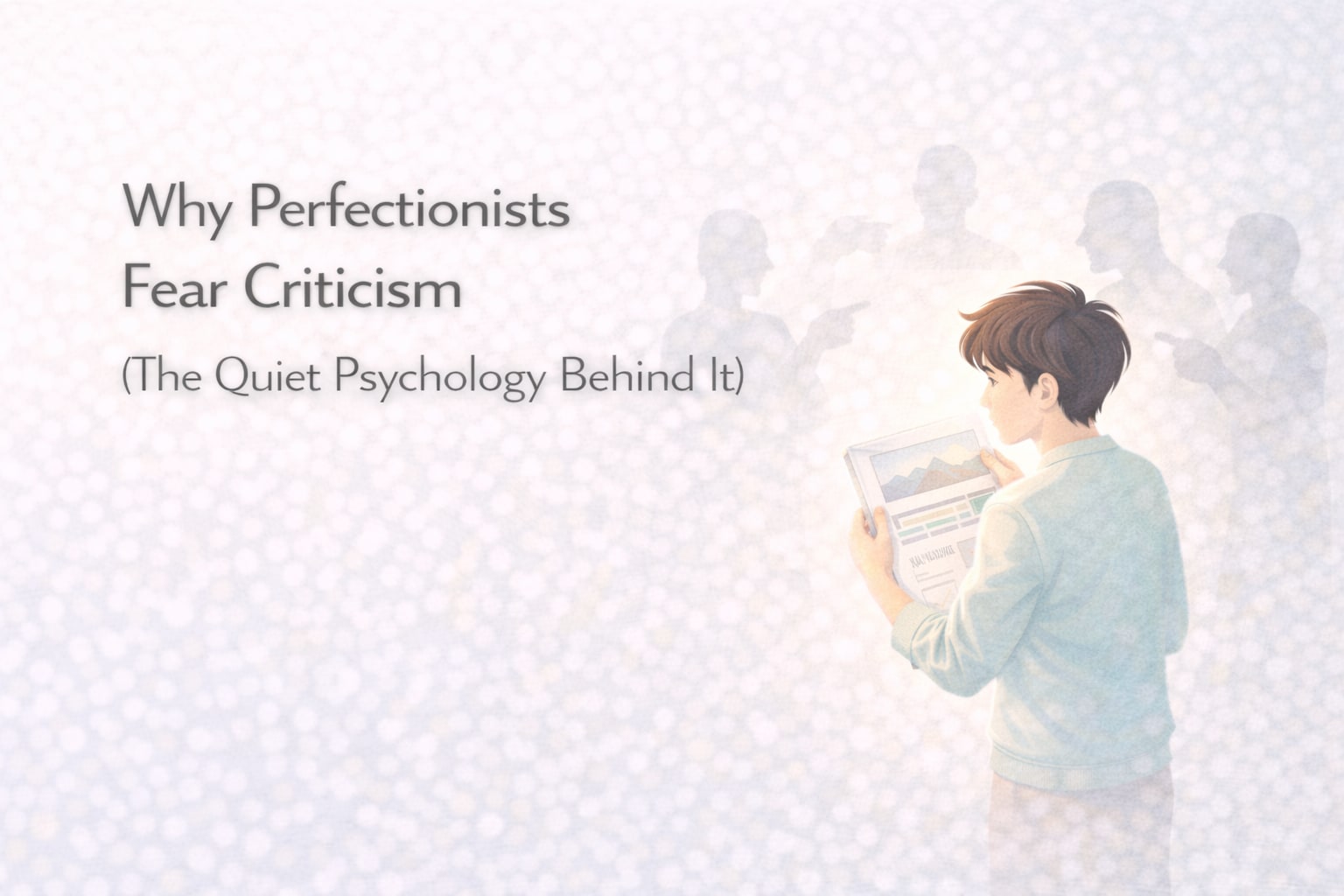
Why Perfectionists Fear Criticism
Why perfectionists fear criticism is something many people quietly experience but rarely talk about.
You finish a piece of work.
A project.
An article.
A presentation.
Before sharing it, your mind pauses.
Not because the work is unfinished.
But because a small question appears.
What if someone points out what I missed?
You look at the work again.
You adjust something.
Then you adjust something else.
You might not notice it immediately.
But if you watch closely, a subtle pattern begins to appear.
The work itself is no longer the focus.
The real focus becomes protecting the work from criticism.
And that’s where perfectionism quietly begins to tighten its grip.
What This Behavior Actually Is
On the surface, fearing criticism looks like sensitivity.
Or maybe insecurity.
But psychologically, something more interesting is happening.
Perfectionists often connect their work very closely to their identity.
The project isn’t just a project.
It becomes a reflection of their competence.
Their intelligence.
Their standards.
So when the possibility of criticism appears, the brain interprets it differently.
It doesn’t feel like feedback about the work.
It feels like feedback about the person behind it.
That’s why even small comments can feel surprisingly heavy.
A simple suggestion might echo in the mind for hours.
Sometimes days.
The brain replays the moment repeatedly — a pattern closely related to the mental cycles explored in overthinking loops.
The mind is not just remembering the feedback.
It is analyzing what it might mean.
Why Perfectionists Fear Criticism
The reason perfectionists fear criticism has less to do with weakness and more to do with how the mind handles evaluation.
Perfectionists usually set extremely high internal standards.
Often higher than the standards anyone else expects.
So before the work is even shared, the brain is already running a quiet internal audit.
Is this good enough?
Did I miss something?
What would someone criticize here?
The mind begins predicting possible negative reactions.
This prediction process feels like preparation.
But over time, it turns into mental surveillance.
The brain constantly scans the work for flaws.
Because if the flaws are found early enough, maybe they can be fixed before anyone else sees them.
This protective instinct can slowly drift into the patterns described in self-sabotage patterns.
Not because the person wants to fail.
But because avoiding criticism becomes more important than sharing the work.
The Hidden Cost
At first, this pattern seems helpful.
It pushes people to produce high-quality work.
To think carefully.
To refine details.
But the hidden cost slowly appears.
Sharing becomes stressful.
Publishing feels risky.
Even finishing something can feel uncomfortable.
Because once the work is visible, control disappears.
Other people bring their own perspectives.
Their own opinions.
And perfectionists often imagine the worst versions of that feedback.
Over time, the mind learns a subtle lesson.
If criticism feels painful, avoid situations where criticism can happen.
So projects remain drafts.
Ideas stay private.
Creative work sits in folders.
The mind continues polishing.
But the world never quite sees the result.
And slowly, perfectionism stops being about quality.
It becomes about protection.
A Small Shift That Changes the Pattern
Perfectionism rarely disappears through force.
But the relationship with criticism can change.
Sometimes the shift begins with small observations.
Separate the work from the identity
Criticism of a project is not criticism of a person.
It is simply information about the work.
Expect feedback as part of creation
Every piece of work improves through interaction with others.
No finished work arrives perfectly formed.
Notice the moment fear appears
Often the fear of criticism appears before the criticism itself.
The mind imagines a reaction that has not happened yet.
Recognizing that moment weakens its influence.
These small shifts slowly interrupt the mental loops connected to overthinking loops.
The brain learns that feedback is not a threat.
It is part of the process of creating something real.
Final Reflection
If you watch perfectionism carefully, something surprising appears.
It rarely begins with arrogance.
It usually begins with care.
Perfectionists care deeply about the quality of their work.
They care about doing things well.
But somewhere along the way, that care can quietly turn into fear.
Fear of mistakes.
Fear of judgment.
Fear of criticism.
And when fear becomes the guiding force, the mind begins protecting instead of creating.
But once you notice this pattern, something subtle changes.
Criticism stops feeling like a verdict.
It starts looking more like a conversation.
And conversations are how ideas grow.
Q: Why do perfectionists take criticism so personally?
A: Perfectionists often link their work closely with their identity. When someone criticizes the work, the brain may interpret it as criticism of the person, which makes the feedback feel more intense.
Q: Is fear of criticism a form of perfectionism?
A: Yes. Many perfectionists fear criticism because it threatens the ideal standard they try to maintain. This fear can lead to overthinking, constant revision, or delaying sharing their work.
Q: Why do perfectionists overthink feedback?
A: Perfectionists tend to analyze feedback deeply to understand every possible implication. This can create mental loops where the brain replays comments repeatedly while trying to extract meaning.
Q: How can perfectionists handle criticism better?
A: Viewing feedback as information about the work rather than a judgment of personal ability can help. Separating identity from output reduces the emotional weight of criticism.
